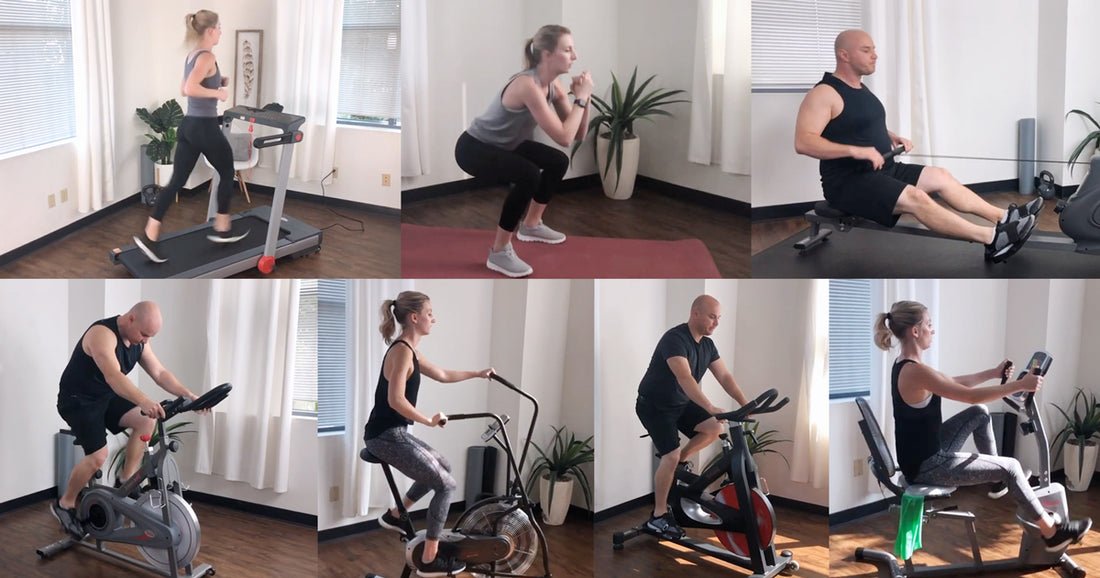
Bicycle sprints combined with resistance bands offer an effective, low-impact workout to build lower body power and increase cardiovascular endurance. This exercise targets your glutes, hamstrings, quadriceps, and core simultaneously.
The Benefits
- Increased Power: The added resistance forces muscles to work harder, leading to greater power output and explosive strength in the legs.
- Enhanced Endurance: Sprints are excellent for HIIT (High-Intensity Interval Training) and when combined with resistance, push your cardiovascular system, significantly boosting stamina.
- Low Impact: Unlike running sprints, cycling is gentle on the joints while still providing a vigorous workout.
- Core Engagement: Maintaining stability while sprinting against resistance actively engages your abdominal and lower back muscles.
How to Perform the Workout
You will need a stationary bicycle and a set of resistance loop bands.
Setup
- Secure the Bands: Take one large resistance loop band and loop it around the base of the stationary bike frame, near the bottom bracket or pedals.
- Attach to Feet: Bring the other end of the band around your feet, ensuring it is securely placed over the middle of your cycling shoes.
- Adjust Tension: Ensure the band has consistent tension throughout the pedaling motion. You may need to use a heavier or lighter band to find the optimal level of resistance.
The Sprint
- Warm-up: Start with a 5-10 minute easy spin to prepare your muscles.
- Interval Structure: Alternate between high-intensity sprints and low-intensity recovery periods. A common structure is:
- Sprint: Pedal as hard and fast as you can for 20-30 seconds against the band’s tension.
- Recovery: Pedal slowly and at an easy pace for 60-90 seconds.
- Repeat: Complete 5-8 repetitions of the sprint/recovery cycle.
- Cool-down: Finish with a 5-minute easy spin and stretching.
Tips for Success
- Maintain Form: Keep your back straight and engage your core to avoid injury and maximize efficiency.
- Listen to Your Body: This is an intense workout. Do not push yourself past your limits.
- Progressive Overload: As you get stronger, use a band with higher resistance or increase the duration of your sprints to continue challenging your muscles.
By integrating this challenging variation into your fitness routine, you can break through plateaus and significantly improve your lower body power and overall fitness.
Bicycle sprints with resistance bands combine cardiovascular intensity with muscle strengthening, boosting power, endurance, and injury prevention. Learn how to set up, benefits, and tips for incorporating this dynamic workout into your routine.
Bicycle sprints are a staple exercise for improving cardiovascular health, building lower body strength, and increasing endurance. However, adding resistance bands to the equation can supercharge your results by providing increased resistance, targeting different muscle groups, and pushing your fitness to new heights. This article dives deep into the benefits, techniques, and tips for incorporating bicycle sprints with resistance bands into your workout routine.
What Are Bicycle Sprints with Resistance Bands?
Bicycle sprints with resistance bands combine two effective exercises: cycling sprints and resistance band training. Cycling sprints focus on improving cardiovascular fitness and enhancing speed and power in the legs, while resistance bands add an additional layer of difficulty, forcing your muscles to work harder. The bands increase resistance during the pedal stroke, making your muscles—especially the quadriceps, hamstrings, calves, and glutes—work harder to propel the bike forward.
When you attach a resistance band to your bicycle, the added resistance will require your muscles to contract more forcefully during each pedal stroke. This combination helps build both muscular strength and cardiovascular endurance, leading to improved power output, stamina, and overall fitness.
Benefits of Bicycle Sprints with Resistance Bands
1. Increased Muscle Activation
One of the primary benefits of adding resistance bands to bicycle
sprints is the increased activation of the muscles in your legs. Resistance bands create tension throughout the pedal stroke, which forces the muscles to work harder both during the push phase (when you’re pushing down on the pedal) and the pull phase (when you’re lifting your leg to complete the stroke). This leads to greater muscle engagement, which translates into improved muscle tone and strength over time.
2. Enhanced Cardiovascular Endurance

The added resistance from the bands makes each pedal stroke more challenging, requiring more energy to complete. As a result, your heart rate increases, and the workout becomes more aerobic. Over time, this helps improve cardiovascular endurance, allowing you to bike longer distances or sprint faster without tiring.
3. Improved Power Output
Power output refers to the amount of force you can generate in a short amount of time. By incorporating resistance bands into your bicycle sprints, you enhance your ability to generate force during each pedal stroke, improving your power output. This can be beneficial for athletes in cycling, sprinting, or any sport that requires explosive movements.
4. Injury Prevention and Rehabilitation
Resistance band training is often used for rehabilitation purposes, as it helps improve flexibility, stability, and joint mobility. When you use resistance bands during bicycle sprints, you strengthen stabilizing muscles in the hips, knees, and ankles. This can reduce the risk of injury, particularly when cycling long distances or pushing your limits with high-intensity sprints.
5. Core Engagement
As you pedal with added resistance, your core muscles—especially your abdominals and obliques—are forced to stabilize your body. This not only helps in maintaining proper posture but also tones the core, providing additional benefits beyond just your legs.
6. Versatility and Convenience
One of the best things about using resistance bands for bicycle sprints is the convenience and versatility they offer. Resistance bands are inexpensive, lightweight, and portable, making it easy to incorporate them into your cycling routine, whether you’re training indoors on a stationary bike or outdoors on a road bike.
How to Set Up Bicycle Sprints with Resistance Bands
Step 1: Choose the Right Resistance Bands

Before starting, ensure that you have the correct resistance bands for your fitness level. Resistance bands come in different thicknesses, with thicker bands providing more resistance. If you are new to resistance band training, start with a lighter band and progress to thicker bands as you become stronger.
Step 2: Secure the Band to the Bike
To attach the resistance band to the bike, place one end of the band around the pedals or crankset, depending on the type of bike you have. Ensure the band is securely fastened to avoid it slipping off during your sprints. If you’re using a stationary bike, you can loop the band around the rear wheel or pedals.
Step 3: Position Yourself Properly
Start in a seated position on the bike with your feet firmly placed on the pedals. Keep your back straight and engage your core to maintain proper posture throughout the workout. Before starting, ensure that there’s enough slack in the band so that you can pedal without the band being too tight.
Step 4: Begin Your Sprint
Start pedaling at a moderate pace to get a feel for the resistance band’s tension. Once you’re comfortable, accelerate into a full sprint by increasing your pedaling speed. Focus on maintaining smooth, controlled pedal strokes while keeping the tension in the band consistent. If the resistance feels too strong, decrease the intensity or use a lighter band. Sprint for 15 to 30 seconds at maximum effort, followed by a short rest period.
Step 5: Repeat the Cycle
After each sprint, rest for 30 to 60 seconds, allowing your muscles to recover. Perform 4-6 sprints per session, depending on your fitness level. Over time, you can gradually increase the number of sprints or the duration of each sprint as you get stronger.
Tips for Maximizing Bicycle Sprints with Resistance Bands
1. Warm-Up Properly
It’s crucial to warm up before any intense workout, and this is especially true when incorporating resistance bands. A proper warm-up will increase blood flow to your muscles, reduce the risk of injury, and improve your overall performance. Consider a few minutes of light cycling, followed by dynamic stretches for your legs and hips.
2. Use Progressive Overload
To see continued progress, you need to challenge your body over time. Start with a lighter resistance band and gradually increase the thickness as you become stronger. You can also increase the duration of your sprints, reduce rest periods, or add more sprints to each session.
3. Focus on Form and Technique
As you add resistance, it’s easy to lose focus on form. Maintain proper posture while cycling to avoid straining your back and neck. Engage your core and keep your shoulders relaxed to prevent unnecessary tension. Always aim for smooth, controlled pedal strokes.
4. Incorporate Variety
Mixing different types of sprints into your training will help prevent boredom and improve different aspects of your fitness. You can experiment with interval sprints (e.g., 30 seconds on, 30 seconds off), pyramid sprints (e.g., gradually increasing and decreasing sprint duration), or even uphill sprints if you’re cycling outdoors.
5. Cooldown and Stretch
After your workout, don’t forget to cool down by cycling at a slow pace for a few minutes, followed by static stretching. This will help reduce muscle soreness and improve flexibility.
Conclusion: Why You Should Incorporate Bicycle Sprints with Resistance Bands
Bicycle sprints with resistance bands are an excellent way to take your cycling workouts to the next level. The added resistance challenges your muscles, improves your power output, enhances cardiovascular endurance, and helps prevent injuries. Whether you’re a professional athlete or a fitness enthusiast, this workout provides a unique and effective way to boost your performance.By incorporating this exercise into your routine, you’ll engage more muscles, build greater strength, and ultimately become a more powerful cyclist. So, grab a resistance band, hop on your bike, and start reaping the benefits of this powerful combination!
Q&A Section
Q: Can I do bicycle sprints with resistance bands on a stationary bike?
A: Yes, absolutely! Bicycle sprints with resistance bands can be done on both road bikes and stationary bikes. Just secure the resistance band to the bike and start your sprint intervals.
Q: How often should I incorporate resistance band bicycle sprints into my workout routine?
A: For optimal results, aim to do resistance band bicycle sprints 2 to 3 times per week. Make sure to give yourself enough time for recovery between sessions.
Q: Will this workout help me lose weight?
A: Yes! The combination of intense cycling sprints and the added resistance can boost your metabolism, burn fat, and contribute to weight loss. However, it’s important to combine this workout with a balanced diet for the best results.
Q: How do I know if I’m using the right resistance band?
A: Start with a lighter resistance band and gradually progress to thicker bands as you get stronger. If the band feels too easy, it’s time to increase the resistance. Conversely, if the band feels too difficult, switch to a lighter band to maintain proper form.
Q: Can this workout be done outdoors?
A: Yes! You can easily perform bicycle sprints with resistance bands outdoors. Simply attach the band to a stationary object or secure it to the bike while riding.
Q: What are the best resistance bands for bicycle sprints?
A: Look for high-quality, durable resistance bands that are designed for cycling workouts. Ideally, choose a band that has enough stretch to allow for full pedal strokes while still providing enough resistance to challenge your muscles.
