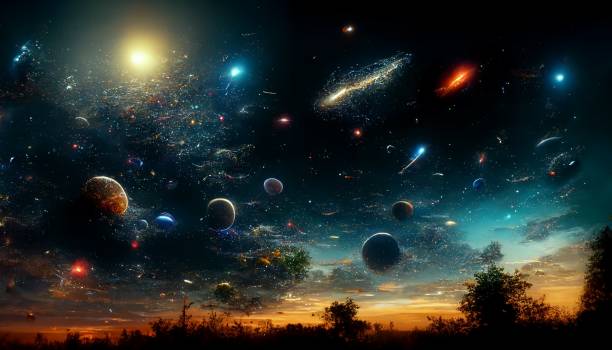

The idea that our universe may be just one among many has fascinated scientists, philosophers, and spiritual thinkers alike. Interestingly, Hindu cosmology, developed thousands of years ago, already presents a vision of reality that closely resembles what modern science today calls the multiverse theory. Though expressed in symbolic and philosophical language, Hindu scriptures describe an infinite, cyclical, and multi-layered cosmos that aligns remarkably with contemporary cosmological ideas.
1. Understanding Hindu Cosmology
Hindu cosmology is rooted in ancient texts such as the Vedas, Upanishads, Puranas, and Itihasas. It views the universe not as a single, linear creation but as a vast, eternal system of repeated creation and destruction.
Key features include:
- Infinite universes (Brahmandas)
- Cyclical time (Kalachakra)
- Multiple planes of existence (Lokas)
- A cosmic order governed by natural laws (Dharma)
The universe is seen as dynamic, not static.
2. The Concept of Brahmanda: Cosmic Eggs
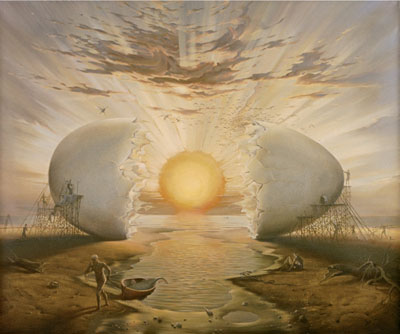
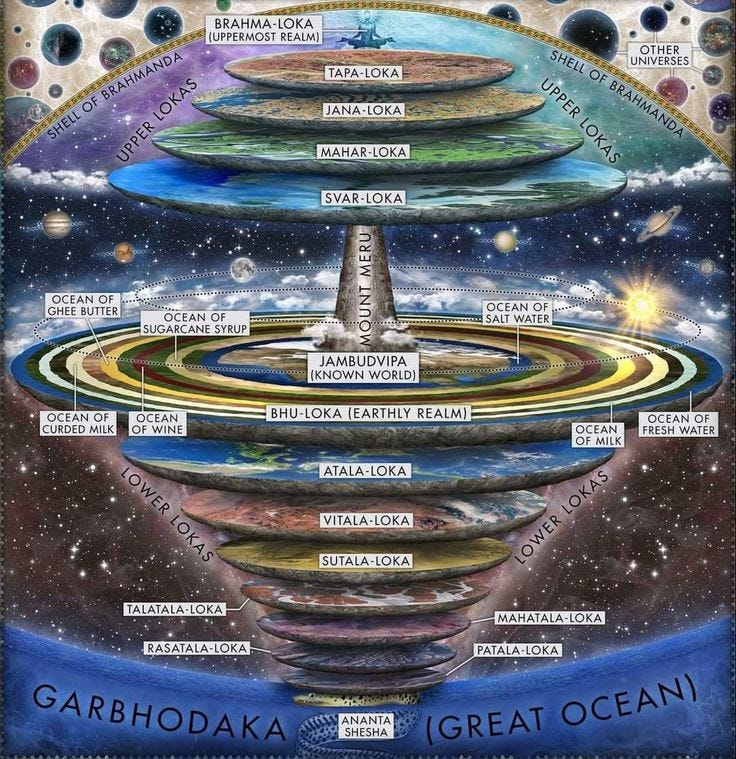
In Hindu thought, each universe is called a Brahmanda, meaning “cosmic egg.” According to the Puranas:
- Countless Brahmandas exist simultaneously
- Each Brahmanda contains its own space, time, matter, and laws
- Every universe emerges, evolves, and dissolves independently
This idea closely mirrors the multiverse hypothesis in modern physics, which suggests the existence of multiple universes beyond our own.



3. Cyclical Time vs. Linear Time
Modern science often views time as linear, with a beginning (Big Bang) and a possible end. Hindu cosmology, however, describes cyclical time:
- Yugas (ages) repeat in cycles
- Kalpas represent a full day of Brahma
- Creation (Srishti), preservation (Sthiti), and destruction (Pralaya) occur endlessly
This cyclical model resembles modern cosmological theories like oscillating universes and cyclic cosmology.
4. Lokas: Multiple Realms of Existence
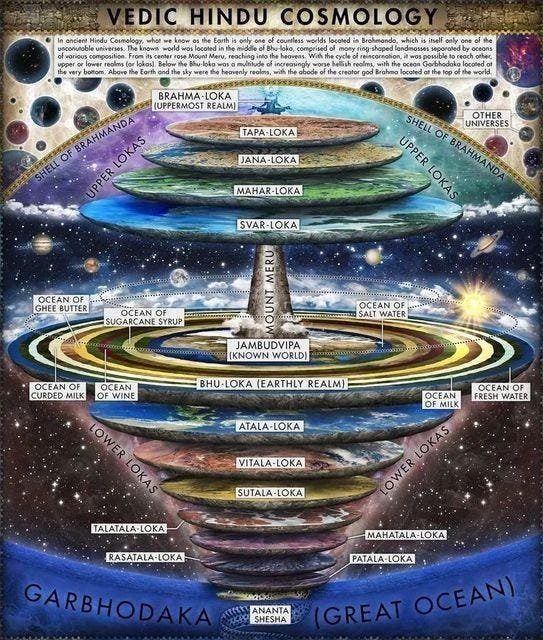
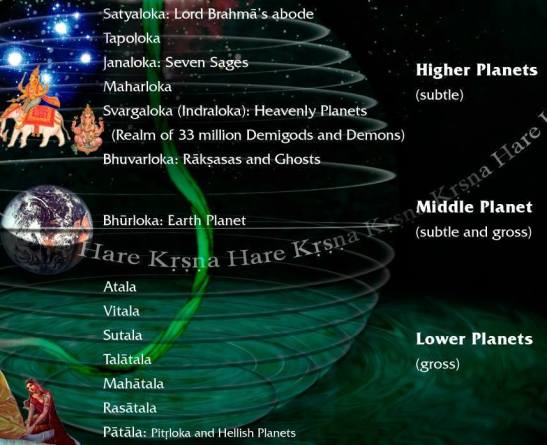
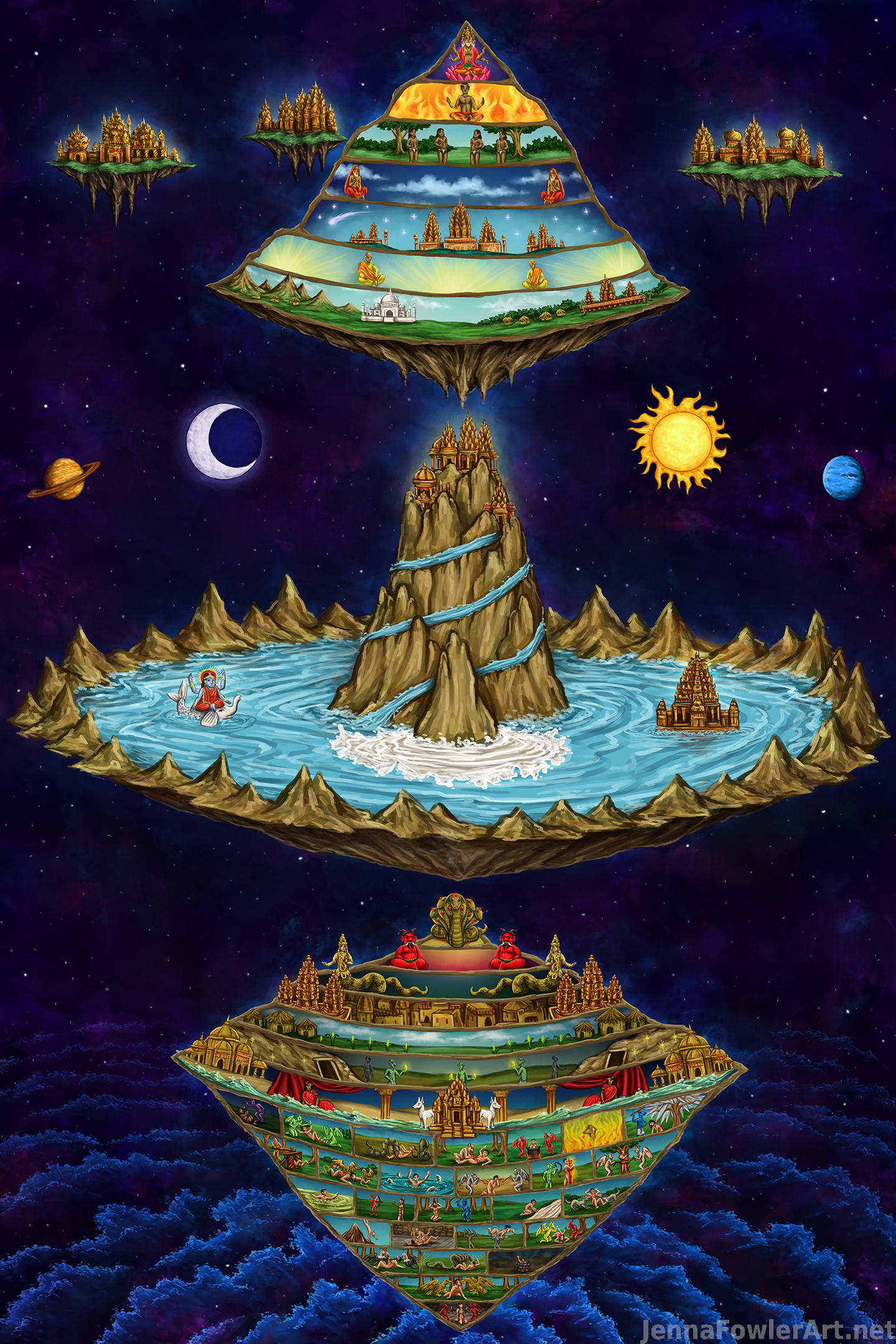
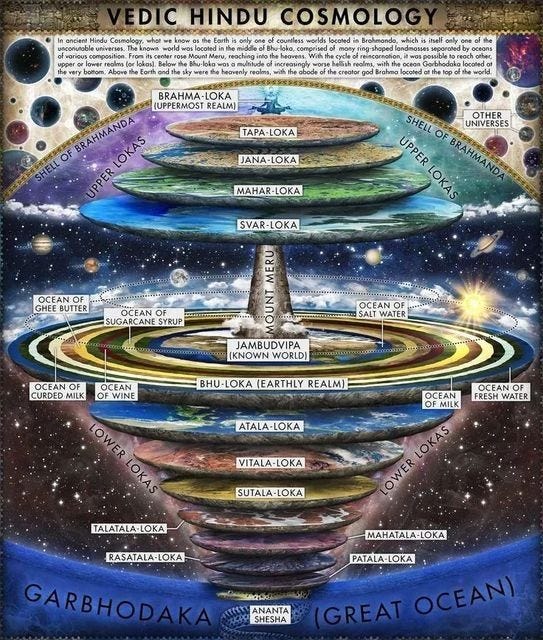
Hindu texts describe 14 Lokas, or planes of existence, ranging from material to subtle realms:
- Bhuloka (Earth realm)
- Swargaloka (celestial realms)
- Patala (lower realms)
These Lokas are not merely mythological but symbolize different dimensions or states of existence, similar to higher-dimensional spaces discussed in theoretical physics.


5. Brahma, Vishnu, and Shiva: Cosmic Functions
The Hindu trinity represents universal processes:
- Brahma – creation
- Vishnu – preservation
- Shiva – transformation and dissolution
Rather than being human-like gods, they symbolize cosmic forces, much like energy laws in physics that govern the universe’s birth, stability, and destruction.
6. Modern Multiverse Theory Explained
In modern cosmology, the multiverse theory suggests:
- Our universe may be one of many
- Each universe may have different physical constants
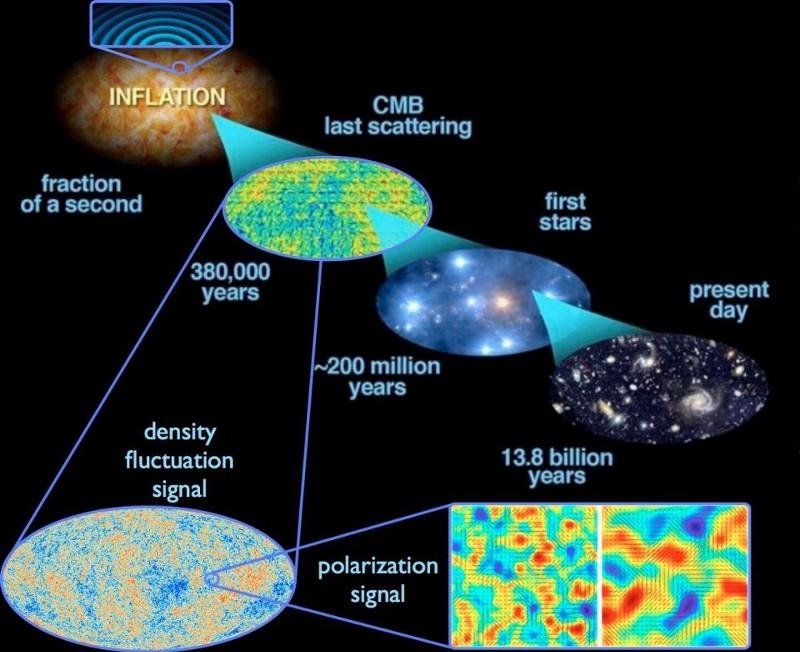
- Universes may emerge from cosmic inflation or quantum processes
Though still theoretical, this idea is widely discussed in quantum physics and cosmology.





7. Parallels Between Hindu Cosmology and the Multiverse
| Hindu Cosmology | Modern Multiverse Theory |
|---|---|
| Infinite Brahmandas | Multiple universes |
| Cyclic creation | Cyclic/oscillating models |
| Multiple Lokas | Higher dimensions |
| Cosmic time scales | Billions of years |
While Hindu cosmology is philosophical and symbolic, and modern cosmology is mathematical and experimental, both attempt to explain the same mystery: the nature of reality.
8. Science, Symbolism, and Interpretation
It is important to note:
- Hindu cosmology is not modern physics
- The similarities are conceptual, not experimental proof
- Ancient texts used symbolism to convey vast ideas
However, these parallels show that ancient thinkers had an extraordinary cosmic imagination, far ahead of their time.
9. Why These Ideas Matter Today
Exploring Hindu cosmology alongside modern science:
- Encourages open-minded inquiry
- Bridges science and philosophy
- Inspires deeper questions about existence
- Shows the universality of human curiosity
Both traditions remind us that reality may be far greater than what we can see or measure.
Hindu cosmology presents a vision of the universe that is infinite, cyclic, and multi-dimensional—ideas that resonate strongly with today’s multiverse theory. While science seeks proof through equations and observation, Hindu philosophy approached the cosmos through intuition, symbolism, and meditation. Together, they offer complementary perspectives on the same profound question: Are we living in just one universe, or in an endless ocean of man
Hindu cosmology presents a vision of a universe that is ever-changing and infinitely vast, offering striking similarities to the modern scientific idea of the multiverse. Explore this fascinating connection.
Ancient Views on the Cosmos: A Deep, Infinite Universe
For thousands of years, Hindu cosmology has offered an extraordinary perspective on the nature of the universe, one that often feels ahead of its time. Unlike many other religious cosmologies, Hindu thought has always embraced the idea that the universe is not static but rather cyclical and constantly in a state of flux. Central to Hindu cosmology is the concept of Kala (time) and the cosmic cycles that govern the rise and fall of worlds, a worldview where creation, preservation, and destruction occur in infinite cycles.
According to Hindu texts like the Vedas and Upanishads, the universe undergoes vast cycles of creation and dissolution. This cyclical nature of the cosmos is reflected in the concept of Yugas, or ages, that repeat endlessly. These cosmic cycles seem strikingly similar to the ideas of the multiverse and the ever-expanding nature of reality as proposed by modern physics.
In Hindu thought, the universe is understood as a Brahmanda (cosmic egg), which holds all that exists within it. This idea resonates with the concept of an expansive, self-contained universe, one that is constantly expanding and contracting in rhythmic cycles. But what is even more intriguing is the idea that this cosmos might be just one of countless others. The idea of multiple universes—what we call the multiverse theory—bears a striking resemblance to these ancient beliefs.
The Multiverse Theory: A Scientific View of Infinite Universes
In contemporary physics, the multiverse theory suggests that our universe may not be the only one. Instead, there could be many other universes, each with its own set of physical laws, constants, and properties. The idea of the multiverse emerged from various branches of physics, particularly quantum mechanics and cosmology, where concepts like parallel worlds, string theory, and the inflationary model of the Big Bang provide a framework for understanding how multiple universes might exist.
One of the most popular versions of the multiverse theory is the many-worlds hypothesis, which suggests that every quantum decision creates a branch of reality, leading to the existence of an infinite number of parallel universes. Another interpretation comes from the string theory, which proposes that the universe is made up of tiny, vibrating strings, and different configurations of these strings could result in entirely different universes.
While the scientific multiverse theory is still largely theoretical, its basic premise—multiple universes existing alongside one another, each with its own unique characteristics—has remarkable parallels to the Hindu vision of a vast, complex, and ever-evolving cosmos.
Parallels Between Hindu Cosmology and the Multiverse Theory
Hindu cosmology, particularly in texts like the Mahabharata and Puranas, suggests that our universe is one of many, each existing within its own cosmic cycle. The idea that there are countless worlds, planes of existence, or universes is woven into Hindu thought, where different realms (such as the heavens and hells) exist simultaneously. Just as modern scientists propose that the multiverse could include different dimensions and parallel universes, Hindu texts speak of numerous lokas (realms), each with its own unique characteristics, gods, and inhabitants.
Furthermore, the Hindu concept of Brahman, the ultimate reality, supports a view of the cosmos as an interconnected, infinite whole. The Brahmanda itself is cyclical, and its dissolution at the end of each cycle paves the way for the creation of another, which is akin to the idea that each universe in the multiverse may have its own beginning and end. The cyclical nature of time in Hindu cosmology mirrors the expanding and contracting of universes in the multiverse, suggesting a recurring process of creation, preservation, and destruction that transcends any one universe.
This idea is deeply embedded in the concept of Maya, the illusion of the material world, which in Hindu philosophy is seen as temporary and ever-changing. Just as the physical laws of the universe in one multiverse might differ from those in another, the material world in Hindu cosmology is viewed as impermanent and ephemeral, existing as a fleeting manifestation of an underlying reality.
Time in Hindu Cosmology: An Endless Time is perhaps one of the most fascinating concepts in both Hindu cosmology and modern physics. In Hinduism, time is viewed as cyclical, not linear. The world goes through a vast process of creation, destruction, and renewal, which is called the Kalachakra, the wheel of time. This cyclical understanding of time suggests that the universe is constantly evolving, disappearing, and reappearing in endless cycles of creation (Srishti), preservation (Sthiti), and destruction (Pralaya).
Interestingly, this idea aligns with modern theories about the universe’s potential rebirth. The Big Bang theory suggests that the universe had a singular origin, but some cosmologists believe that it may expand and contract over billions of years in a cyclical process known as the Big Crunch. In this way, the Hindu view of time provides a profound cosmic rhythm that reflects the ideas of an expanding and contracting universe, similar to the multiverse’s potential for infinite variations of existence.
In both views—Hindu cosmology and the multiverse—the concept of infinite time opens up endless possibilities. Time and space themselves may not be fixed but constantly evolving, giving rise to the notion of endless parallel realities and dimensions.
Scientific Inquiry Meets Ancient Wisdom
While the multiverse theory remains a highly debated and speculative area of modern physics, its parallels to ancient Hindu cosmology cannot be ignored. Hindu texts have long posited a universe filled with countless realms and dimensions, some hidden from human perception, others beyond our comprehension. The similarities between the ancient wisdom of Hindu cosmology and the modern scientific exploration of the multiverse suggest that both science and spirituality may be converging on similar understandings of the cosmos.
This fusion of ancient spiritual insights and modern scientific theories invites us to reflect on the broader implications of the multiverse. If indeed there are infinite realities co-existing with our own, perhaps the Hindu concept of interconnectedness, where all beings and events are part of a unified divine existence, offers a valuable lens through which we can understand the nature of our universe and our place within it.
Conclusion: A Timeless Vision of the Infinite
The intersection of Hindu cosmology and the multiverse theory offers an intriguing perspective on the nature of reality. The ancient Hindu understanding of the cosmos as cyclical, vast, and multi-dimensional aligns with the modern scientific view of an infinite, ever-expanding universe filled with infinite possibilities. This convergence of science and spirituality suggests that the universe is not a fixed, linear entity but a dynamic, ever-evolving phenomenon. Both the Hindu worldview and the multiverse theory provide a timeless vision of a reality that is vast, interconnected, and beyond our full comprehension.
As we continue to explore the mysteries of the cosmos, we may find that the ancient wisdom of Hindu cosmology holds valuable insights that resonate with the findings of modern science. Whether viewed through the lens of ancient texts or contemporary quantum physics, the idea of an infinite and ever-expanding universe invites us to rethink our place in the grand scheme of existence and open our minds to the boundless possibilities that lie ahead
Q&A: The Intersection of Hindu Cosmology and the Multiverse
Q: How does Hindu cosmology describe the universe?
A: Hindu cosmology sees the universe as cyclical and ever-changing, with endless cycles of creation, preservation, and destruction. It suggests that our universe is one of many, existing within vast cycles of time.
Q: What is the multiverse theory in modern physics?
A: The multiverse theory proposes that there are many universes, each with its own unique laws of physics. These universes may exist simultaneously or parallel to each other, offering infinite possibilities.
Q: How are Hindu cosmology and the multiverse theory similar?
A: Both ideas suggest an infinite and ever-expanding universe. Hindu cosmology speaks of countless realms and cycles of creation and destruction, while the multiverse theory posits many universes with different properties.
Q: Does the Hindu concept of time align with modern physics?
A: Yes, Hindu cosmology views time as cyclical, with endless cosmic cycles, similar to some theories in physics that propose the universe could undergo multiple expansions and contractions over time.
Q: Can modern science and ancient Hindu cosmology be reconciled?
A: Both fields seem to point toward a universe that is interconnected and infinitely expansive. The parallels between Hindu cosmology and the multiverse theory invite further exploration of the intersection between science and spirituality