
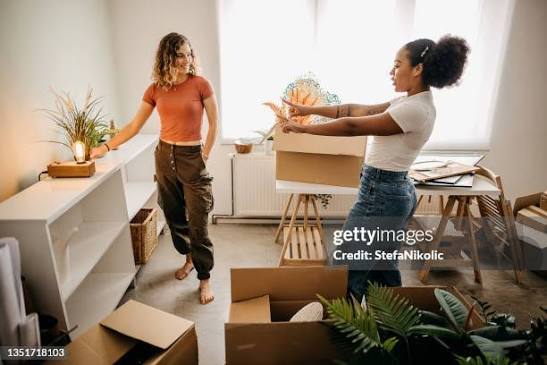



Living in a Rented House

Living in a Rented House: Why Millions of Indians Leave Their Own Place and Come to Cities Like Delhi, Noida and Ghaziabad
For many people, a rented house is not their first choice. They would love to have a house of their own, a permanent address and a place where nobody can suddenly ask them to leave.
But life does not always give people that choice.
A large number of people leave their villages, small towns or even their own houses and come to big cities because there is work here. Delhi, Noida and Ghaziabad are among the major parts of the National Capital Region (NCR), where factories, offices, construction projects, shops, warehouses, delivery services, domestic work and other employment opportunities attract people from different parts of India.
For them, renting a room is not simply a housing decision. It is often the price they pay for employment, independence and a better future.
At the same time, rented life has its own difficulties—high rent, security deposits, overcrowding, landlord restrictions, uncertain income, commuting costs, lack of privacy and the constant fear of having to move.
- How Many Indians Live in Rented Houses?
There is an important difference between all India and urban India.
The latest nationwide figure I found from the World Bank’s analysis of India’s Consumption Expenditure Survey for 2022–23 puts the share of households living in rented dwellings at about 12.3% nationally. In urban India, the share was much higher, at about 31.1%. In rural India, it was only around 3.6%.
The older but more detailed Census 2011 data showed a similar pattern: around 11.1% of all Indian households lived in rented houses, while the share in urban India was approximately 27.5%.
In simple words:
India overall: roughly 12 out of every 100 households are renters according to the 2022–23 survey.
Urban India: roughly 31 out of every 100 households are renters.
Rural India: only around 4 out of 100 households are renters.
This tells us something important: renting is primarily an urban phenomenon.
People may have land or a family home in their village, but when they move to a city for work, they need a place close to their workplace. Buying a house immediately is usually impossible, so renting becomes the practical option.
- Does Living on Rent Mean a Person Does Not Have a House?
Not necessarily.
This is one of the biggest misunderstandings about rented housing.
A person living in a rented room in Noida may actually have a house in Bihar.
A worker living in Ghaziabad may have land and a family house in Uttar Pradesh.
A woman living independently in Delhi may have her parents’ house in another city.
So there are two very different types of renters:
First: People who do not own a house
Some people genuinely do not have a house of their own. Low income, lack of land, poverty or family circumstances may make home ownership difficult.
Second: People who own or have access to a home somewhere else
They may have a house in their village or hometown but cannot live there because their employment is somewhere else.
This second category is particularly important in cities like Delhi-NCR.
A migrant worker may technically be a homeowner in his village but still be a tenant in the city where he earns his living.
- Why Do People Come to Delhi, Noida and Ghaziabad?
The biggest reason is simple:
Jobs.
Delhi-NCR has a huge concentration of employment.
Noida and Greater Noida have offices, IT and technology companies, manufacturing units, warehouses, construction projects, service businesses and other industries.
Ghaziabad has manufacturing, trading, transport, construction and industrial activity.
Delhi itself has government offices, private companies, retail, hospitals, restaurants, domestic work, transport, construction, delivery work and thousands of other occupations.
The Census migration data for Delhi shows how important employment is. Delhi had about 7.66 million migrants in 2011, and 28% of Delhi’s migrant population had work/employment as the stated reason for migration. Another 34.8% moved with their household.
The Government of India has also reported that according to Census 2011, about 20.29 lakh people had moved into Delhi for work and employment.
So Delhi is not simply a city where people are born and live permanently.
It is also a city where people arrive for opportunity.
- Why Do Migrant Workers Prefer Renting Instead of Buying?
The answer is mostly financial.
Imagine a worker earning ₹15,000–₹25,000 a month.
Buying a house in Delhi-NCR may require a huge amount of money that the worker simply does not have.
But renting a room may be possible.
The worker can think:
“I don’t need to own a house here. I need a roof near my workplace so I can earn.”
That is why rental housing becomes connected directly to employment.
For many workers, the calculation is:
Job → City → Room → Rent → Food → Transport → Family expenses → Savings.
If the job disappears, the entire arrangement becomes unstable.
- Noida: A Clear Example of the Rental Problem
Noida provides a good example of how employment and rental housing are connected.
As industrial, commercial and IT activity expanded, the demand for workers also increased.
But workers need affordable accommodation.
Recent reporting from Noida has highlighted workers sharing rooms because rent is too high for their income. One recent report cited ₹8,000–₹10,000 for a one-room accommodation and described workers sharing rooms with several colleagues to reduce their individual housing cost.
Another recent report described workers living four to a room in parts of Noida and Greater Noida because affordable worker housing has not kept pace with employment growth.
This creates a strange situation:
A city creates jobs for workers, but the workers struggle to afford a place to live in the same city.
- Ghaziabad: Why It Attracts Renters
Ghaziabad is important because it offers relatively cheaper housing options compared with many parts of Delhi and central NCR while remaining connected to Delhi and industrial areas.
Census 2011 data for the Ghaziabad-Hapur area showed that about 16.9% of households were rented, rising to 22.5% in urban areas. In Gautam Buddha Nagar, which includes Noida, about 27.7% of households were rented overall and nearly 40% of urban households were rented in the 2011 data.
That is a major difference from rural Uttar Pradesh.
People move toward these urban districts because they are closer to employment.
- Delhi Is Different—But the Same Story Exists
Delhi had about 68.2% owner-occupied households and 28.2% rented households according to Census 2011.
But the situation changes considerably from one part of Delhi to another.
For example, the South-West district had around 38% rented households, while New Delhi district had more than half of households in rented accommodation in the 2011 data.
Delhi’s own Economic Survey also makes an important observation: migrants generally live in rented accommodation, at least initially, before they become more settled.
So renting is not necessarily a sign of failure.
For many migrants, it is the first step toward establishing a life in the city.
- What Is the Most Common Rent Budget?
There is no reliable nationwide government statistic that says “most Indian renters pay exactly ₹X per month.” Rent varies enormously according to city, locality, size of room, income and whether the person lives alone or shares.
But the NCR market gives us a useful picture.
For lower-income workers, the cheapest option is often:
Shared room
PG bed
One small room shared by two to five workers
Small room in an urban village
Room in an unauthorised or informal settlement
Accommodation farther from the workplace
Current listings show how widely prices vary. For example, current Ghaziabad listings put the average 1-RK asking rent around ₹9,000, while Noida 1-RK listings are considerably more expensive on average; however, these listing averages are not representative of all workers, because informal rooms and shared accommodation are often cheaper.
For a worker with a limited income, even ₹5,000–₹8,000 can be a major monthly expense.
That is why sharing becomes common.
- Why Do People Share One Room?
Because rent is easier when divided.
Suppose a room costs ₹8,000.
One person paying the entire amount may find it impossible.
But four workers paying ₹2,000 each can manage it.
The problem is that the saving comes at the cost of:
Privacy
Space
Proper sleep
Cleanliness
Personal belongings
Family life
Mental peace
A recent report from Noida described workers sharing rooms because their wages were not enough to cover rent comfortably.
This is why one small rented room can sometimes contain the entire story of urban migration.
- What Difficulties Do People Face in a Rented House?
Living on rent can look easy from outside.
But the tenant knows the reality.
- Rent increases
The tenant’s salary may increase slowly, while rent may increase faster.
A worker cannot easily change jobs every time rent rises.
- Security deposit
Moving into a new house may require a deposit, advance rent and sometimes brokerage.
For a low-income worker, arranging this money can be extremely difficult.
- No permanent security
A homeowner knows:
“This is my house.”
A tenant often thinks:
“What if the landlord asks me to leave?”
That uncertainty can create constant stress.
- Overcrowding
People share rooms to reduce costs.
Four or five people may sleep in a room designed for one or two.
- Water and electricity problems
In cheaper rental areas, tenants may face irregular water supply, high electricity charges or unclear arrangements over utility bills.
- Distance from work
Cheap rooms are often farther away.
Then the worker saves on rent but spends more on:
Bus
Metro
Auto
Motorcycle
Time
Sometimes a cheaper room actually costs more after transportation is included.
- Lack of privacy
For a married couple, privacy can become a serious problem.
For workers sharing rooms, personal life becomes almost impossible.
- The Biggest Problem: The Tenant’s Salary Is Limited
For a low-income worker, the monthly calculation can become painful.
Suppose someone earns ₹18,000.
If rent is ₹7,000, then nearly 39% of the salary goes into rent before considering electricity, water, food and transport.
If the worker has children, school expenses and family members back home, the pressure becomes even greater.
This is why many workers send part of their income back to their villages while trying to survive in the city on the remaining amount.
- Domestic Workers and Maids Also Depend on Rental Housing
Another important group is domestic workers.
Many maids, cleaners, cooks and other domestic workers do not own homes in the city where they work.
Research on domestic workers in Delhi has found that many live in small rented houses or informal settlements, and low wages and job insecurity make monthly rent difficult to manage.
This creates a direct relationship:
No permanent job security → No permanent income → Difficulty paying rent → Housing insecurity.
For a domestic worker, losing work can therefore become a housing crisis very quickly.
- What About Women Who Leave Their Marital Home?
There is another side of rented housing that is often ignored.
Not every woman comes to a rented house because of a job.
Some women leave their marital homes because of:
Domestic conflict
Problems with husband
Problems with in-laws
Separation
Divorce
Domestic violence
Being forced to leave the marital home
Lack of adjustment within the family
Desire for independent living
Need to raise children independently
Employment in another city
For such women, renting a house is not just about accommodation.
It can mean:
“I need a place where I can live safely and make my own decisions.”
But finding that place can itself be difficult.
Research on single women in South Delhi has documented problems finding rental accommodation, intrusive neighbours and restrictions on their behaviour and visitors.
A 2026 study on rental housing in urban India similarly found that single women can face discrimination because landlords may perceive them as “risky tenants”, even when they have stable employment and sufficient income.
So for some women, leaving the marital home is only the first challenge.
Finding a safe rented home is the second.
- A Woman May Have a Home—But Still Need Another Home
This is another important point.
A woman may technically have a parental home.
But that does not always mean she can comfortably return there.
She may have children.
She may have a job in another city.
Her parents may be elderly.
There may be social pressure.
She may not want to become financially dependent on her parents.
In such circumstances, a rented house can become a symbol of independence.
It may be a small room, but for her it can represent control over her own life.
- Renters Also Face Social Discrimination
Housing problems are not always about money.
Research has documented discrimination in Delhi’s rental market based on religion and caste. One audit study found that Muslim applicants received fewer landlord callbacks than upper-caste Hindu applicants in the studied rental market.
This means that two people with the same salary may not always have the same experience when searching for a house.
Other people may face restrictions because they are:
Single
Divorced
Widowed
Migrants
Students
Bachelors
From another state
From a particular community
Therefore, getting money for rent does not always guarantee getting a house.
- Why Do People Still Enjoy Life in Delhi-NCR?
If rental life has so many problems, why do people stay?
Because the city also gives them opportunities.
A worker may say:
“The rent is high, but there is work here.”
Another may say:
“The room is small, but my children are studying here.”
Someone else may say:
“I came here with nothing. Today I have a job.”
This is the emotional side of migration.
The city may be expensive and difficult, but it can also provide:
Better employment
Higher wages than the village
Better schools
Hospitals
Public transport
More career opportunities
Greater independence
New friendships
Exposure to a different lifestyle
Possibility of saving money
Possibility of eventually buying a house
For many migrants, the rented room is not the destination. It is the starting point.
- Is Delhi-NCR Full of Outsiders Living on Rent?
Yes, Delhi-NCR has a very large migrant population, but there is no single reliable official percentage saying “X% of Noida/Ghaziabad renters are outsiders.”
This distinction is important.
Government statistics separately measure:
Whether a household owns or rents its dwelling.
Whether a person is a migrant.
The reason for migration.
They do not provide a simple combined number such as:
“42% of Noida’s renters are migrants who came for jobs.”
Therefore, such a figure should not be invented.
What the available data clearly shows is that migration and rental housing are strongly connected in large cities. Delhi’s Economic Survey specifically notes that migrants generally begin by living in rented accommodation.
- From Which Areas Do These Renters Come?
Delhi-NCR attracts people from many parts of India.
Major migrant groups have historically come from states such as:
Uttar Pradesh
Bihar
Rajasthan
Haryana
Uttarakhand
West Bengal
Madhya Pradesh
Jharkhand
Odisha
Punjab
Other parts of India
Delhi’s Census migration tables specifically record migrants from Uttar Pradesh, Bihar, Rajasthan, Haryana, Uttarakhand, West Bengal, Madhya Pradesh, Jharkhand, Odisha and many other states.
The biggest reason is simple:
People move from places where opportunities are limited to places where opportunities appear better.
- The Village House and the City Room: Two Different Worlds
Many migrant families live between two homes.
There is the village home, where parents, relatives or other family members may live.
And there is the city room, where the migrant worker lives during the working months.
The worker may spend most of the year in Delhi, Noida or Ghaziabad and return to the village during festivals, holidays or periods without work.
This is sometimes called circular or temporary migration.
The rented room therefore becomes a kind of “work home”.
It is not necessarily where the person’s emotional home is.
- What Happens When the Job Is Lost?
This is one of the biggest dangers of rented life.
For a homeowner, losing a job is financially painful.
For a migrant renter, losing a job can threaten both income and housing.
If rent cannot be paid, the worker may have to:
Borrow money
Share a room
Move to a cheaper locality
Return to the village
Find another job quickly
Delay rent
Reduce food expenses
Research on migrant women in Delhi-NCR during the pandemic showed how employment and housing insecurity became closely connected. Some women described the city as difficult but still preferable to returning to villages where they felt employment and independence were limited.
- Affordable Housing Is Therefore Not Just a Housing Issue
It is also an employment issue.
If a city wants factories, offices, construction workers, delivery workers, security guards, maids, drivers and other workers, those workers need somewhere affordable to live.
Otherwise, the city faces a contradiction:
It needs workers but cannot provide affordable housing for them.
The Government of India’s Affordable Rental Housing Complexes (ARHC) programme was created partly to address rental housing needs of migrants and the urban poor, with rental rates determined through local market surveys and project arrangements.
- What Would Make Rental Life Better?
A better rental system does not necessarily mean that everybody must own a house.
Some people will always prefer renting because they move for work.
The goal should be safe, affordable and secure renting.
Some important improvements would be:
- Affordable worker housing
Industrial areas should have affordable housing close to workplaces.
- Better rental agreements
Tenants and landlords should have clear written agreements.
- Reasonable rents
Rent should be manageable in relation to local wages.
- Safe rooms
Cheap housing should not mean unsafe buildings.
- Better water and sanitation
Every tenant deserves basic services.
- Protection from arbitrary eviction
People should have reasonable notice and legal protection.
- More accommodation for women
Working women, single women and women living independently need safe rental options.
- Housing near employment centres
Workers should not have to spend two or three hours travelling every day simply because they cannot afford to live closer to work.
- The Real Meaning of a Rented House
A rented house can mean different things to different people.
For a young worker, it may mean freedom from the village.
For a married migrant, it may mean a place near the job.
For a labourer, it may simply mean a roof after a hard day’s work.
For a domestic worker, it may mean a small place for the family.
For a single woman, it may mean independence and safety.
For someone who has left a difficult marriage, it may mean starting life again.
For a student, it may mean the first step toward a career.
And for a migrant family, it may mean the temporary home from which they are building a better future.
- The Big Picture: What the Numbers Tell Us
The numbers give us a clear picture.
Around 12.3% of Indian households were renters in the 2022–23 data, but the share was about 31.1% in urban India.
The Census 2011 picture was similar: about 11.1% nationally and 27.5% in urban India.
Delhi had around 28.2% rented households in the 2011 Census, while urban parts of Ghaziabad and Gautam Buddha Nagar had substantially higher rental shares.
Delhi also had millions of migrants, with 28% of migrants reporting work/employment as their reason for migration in the 2011 data.
These figures show that rental housing is not a small side issue.
It is an essential part of India’s urban economy.
- Final Conclusion: The Rented Room Is Often the Price of Opportunity
When we see a small rented room in Noida, Ghaziabad or Delhi, it is easy to see only the room.
But behind that room there may be a much bigger story.
There may be a man who left his village to find work.
There may be a woman who left a difficult marriage and is trying to rebuild her life.
There may be a couple raising children on a limited salary.
There may be four labourers sharing one room so they can send more money home.
There may be a maid who travels across the city every morning to clean other people’s houses while struggling to pay rent for her own.
There may be a young person who has come to the city because they believe their future is here.
So, living on rent does not always mean a person has failed to buy a house.
Sometimes it means the person is working toward a better life.
The rented room may be small.
The rent may be painful.
The city may be difficult.
But for millions of people, that rented room is where the journey begins.
A rented house is not always a sign of poverty. Sometimes it is a sign of migration, employment, independence and hope.