
Sarva Pitru Amavasya 2026: Date, Sharddha
- When is Pitru Paksha ending in 2026?
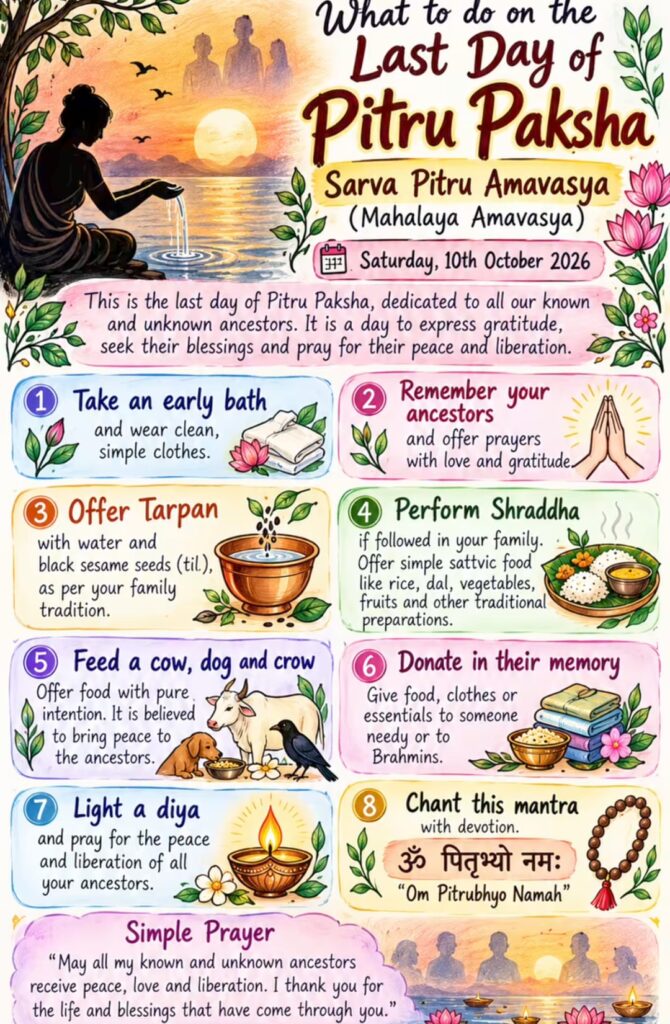
In 2026, Sarva Pitru Amavasya will be observed on Saturday, 10 October, marking the conclusion of Pitru Paksha. It is also known as Mahalaya Amavasya, Sarvapitri Amavasya and Pitru Visarjan Amavasya. The Amavasya tithi begins on the night of 9 October and ends on the night of 10 October.
Drikpanchang
+1
This day is especially important for families who wish to remember their ancestors but do not know the exact lunar date of their death, or who could not perform Shraddha on the appropriate tithi.
Pitru Paksha concludes on 10 October, and Shardiya Navratri begins on 11 October 2026.
The Economic Times
- Why is Shraddha performed?
In Hindu tradition, Shraddha is a way of expressing respect, gratitude and remembrance for departed parents, grandparents and earlier generations.
The word Shraddha is associated with faith and sincerity. The underlying thought is that we should remember those whose lives, hard work, values and sacrifices helped shape our own lives.
The main purposes of Shraddha are:
To express gratitude to deceased family members.
To pray for the peace and spiritual welfare of departed ancestors.
To offer Tarpan, prayers and, where customary, Pind Daan.
To feed guests, priests and people in need.
To pass family values, traditions and stories on to the next generation.
Different Hindu families follow different customs according to their region, family tradition and religious lineage. These rituals are expressions of faith; their spiritual effects are matters of religious belief rather than scientifically established facts.
- The story of Karna and the importance of food donation
myzodiaq
A well-known story associated with Pitru Paksha comes from the Mahabharata tradition.
According to the popular legend, after Karna died, he reached the heavenly realm but was given gold and jewels instead of ordinary food. When he asked why, he was told that although he had donated wealth generously during his lifetime, he had not donated food in memory of his ancestors.
Karna then received an opportunity to return to Earth for a period and perform charitable acts, including food donation, for his ancestors.
The story explains why food, water and charity hold such an important place in Shraddha traditions. Its central message is simple: wealth has value, but feeding someone who is hungry is also a meaningful act of compassion.
The Indian Express
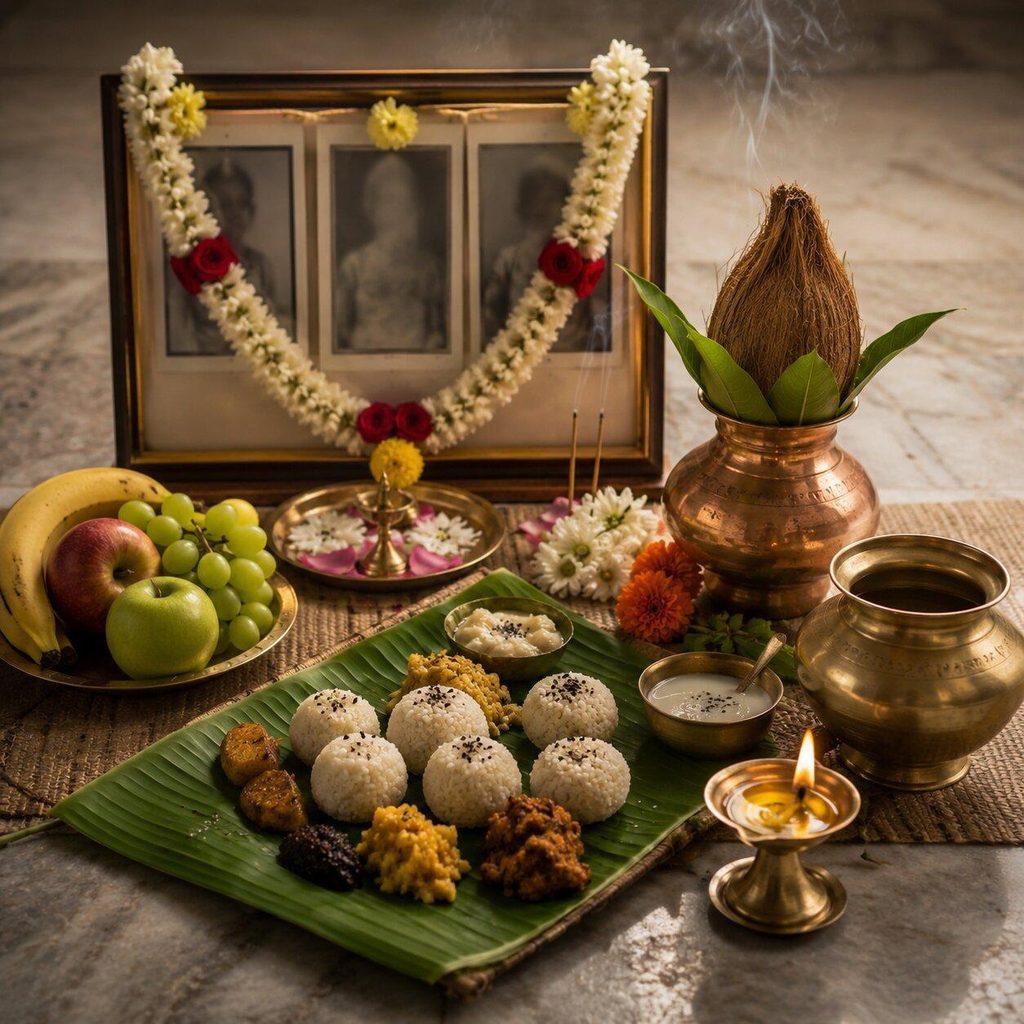
- Complete Puja Samagri: What should be kept ready?
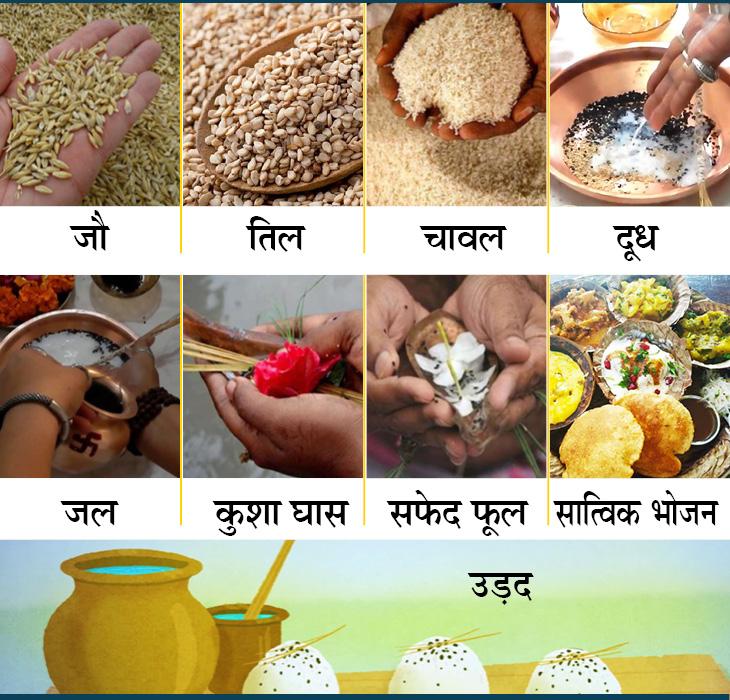
Before beginning the ritual, arrange the necessary items. You do not have to buy every item if some are unavailable; follow your family’s custom and consult a knowledgeable priest for a formal Shraddha ceremony.
Puja item
Traditional purpose
Clean water
Used for Tarpan and offerings
Kusha or Darbha grass
Used in ancestral rites and Tarpan
Black sesame seeds (kale til)
Traditionally added to water offerings
Uncooked rice (akshat)
Used in prayers and offerings
Cooked rice
Used for food offerings and, in some traditions, Pind Daan
Barley (jau)
Used in certain ritual traditions
White flowers
Offered according to family custom
Copper or other clean vessel
Holds water for Tarpan
Diya and cotton wick
For prayer and remembrance
Ghee or oil
For lighting the diya
Incense (agarbatti or dhoop)
Used where customary
Seasonal fruits and bananas
Offered as appropriate
Milk, curd, honey and ghee
Used in certain Pind Daan traditions
Simple vegetarian food
Prepared for Shraddha and charity
Clean plate or leaf plate
Used for serving food
Important: Kusha grass, sesame seeds, water and rice are commonly used in ancestral rites, but their exact use and arrangement vary by tradition.
Jansatta
+1
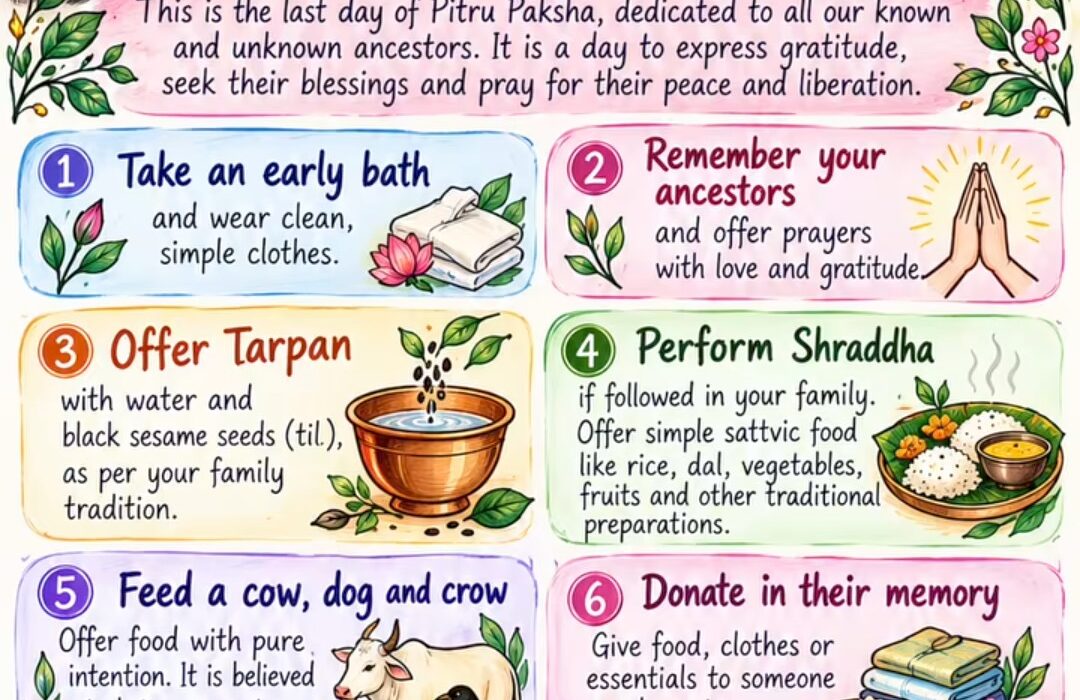
- Step-by-step Shraddha Puja Vidhi
Step 1: Take a bath and prepare the place
Wake up in the morning, bathe and wear clean clothes. Clean the place where you will pray. Keep the puja items ready and sit calmly with a respectful state of mind.
Step 2: Offer water to Surya Dev
Face the rising Sun and offer water from a clean vessel while praying for the well-being of your family and remembering your ancestors. You may chant “Om Suryaya Namah.”
This is a customary morning prayer and is distinct from the specific Tarpan rites for ancestors.
Step 3: Pray to Lord Ganesha and your Ishta Devata
If this is part of your family tradition, begin with a short prayer to Lord Ganesha and your chosen deity. Light a diya and pray for peace, wisdom and the strength to fulfil your duties.
Step 4: Perform Dev Tarpan and Rishi Tarpan, if customary
Some Vedic and regional traditions include offerings to the Devas and Rishis before the ancestral offerings. The mantras, direction and method differ according to the ritual tradition, so follow your family priest’s instructions if performing the complete sequence.
Step 5: Perform Pitru Tarpan
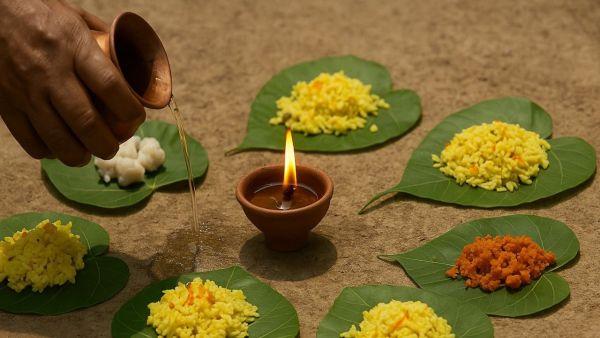
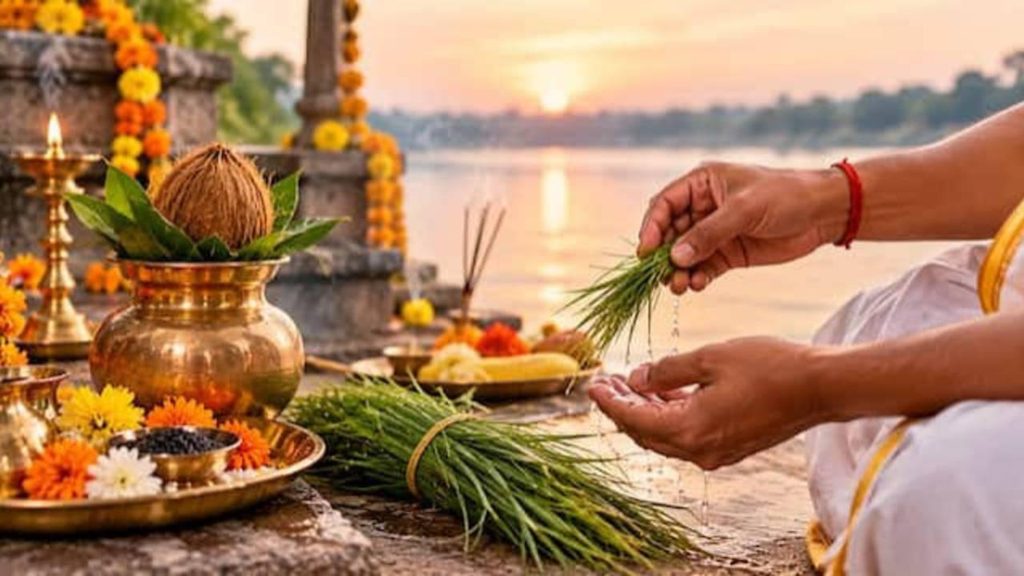
In many traditions, the worshipper faces south and offers water with black sesame seeds and Kusha grass while remembering departed family members. The water is poured carefully into a suitable clean place, following the prescribed method.
The exact hand position, grass arrangement and mantras depend on the ritual being performed.
Step 6: Perform Pind Daan if appropriate
Pind Daan is a ritual offering that often uses cooked rice formed into small balls, sometimes mixed with sesame seeds and other ingredients prescribed by tradition. It may be performed at home or at a designated pilgrimage or riverbank location.
It is not compulsory for every family to conduct an elaborate Pind Daan at home. If you want a formal ceremony, ask a qualified priest which method is appropriate for your family.
Step 7: Prepare the Shraddha meal
Cook fresh vegetarian food with care. Offer a small, respectful portion according to your family custom. If the tradition includes feeding a priest or guests, serve the meal with respect and hospitality.
Step 8: Give food and other charity
Feed invited guests, a priest or people in need according to your means. Some families also offer food to animals in a safe and appropriate way. End with a prayer for the peace of the departed and the well-being of the living family.
- Which mantras can be chanted?
You do not need to chant many mantras to show respect. If you are unfamiliar with formal Vedic mantras, a simple prayer spoken with sincerity is also appropriate for personal remembrance.
- Simple Pitru mantra
Sanskrit
ॐ पितृभ्यो नमः॥
Transliteration: Om Pitribhyo Namah.
Meaning: Salutations to the ancestors.
- Prayer while offering water
ॐ पितृभ्यः स्वधा नमः॥
Transliteration: Om Pitribhyah Swadha Namah.
This is a traditional-style invocation associated with ancestral offerings. Follow the exact mantra prescribed by your family tradition during a formal ceremony.
- Surya mantra
ॐ सूर्याय नमः॥
Transliteration: Om Suryaya Namah.
Meaning: Salutations to Surya Dev, the Sun deity.
- A simple prayer for ancestors
“May my departed parents, grandparents and ancestors be remembered with gratitude. May their souls attain peace, and may our family follow the path of truth, kindness, service and righteousness.”
You can say this prayer in Hindi or English in your own words.
There is no universally required number of repetitions for every household. You may chant a mantra 11 or 21 times as a personal practice, or follow the number specified by your family tradition. These numbers are optional, not a universal requirement.
- What food should be prepared for Pitru Shraddha?
Your question about offering dal, rice, roti, puri, sabzi and sweets is important because food is central to many Shraddha customs.
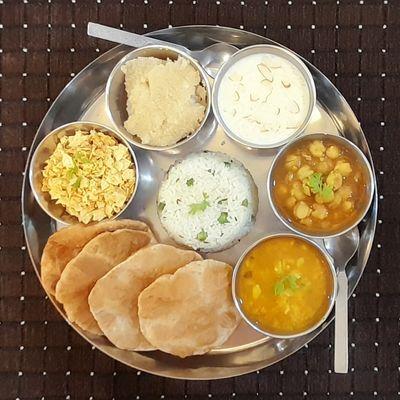
A traditional vegetarian meal may include the following:
Food
Is it suitable?
Plain rice
Yes
Dal
Yes, according to the family’s food rules
Roti or chapati
Yes
Puri
Common in many North Indian traditions
Seasonal vegetable curry
Yes
Kheer
A common sweet offering
Halwa
Common in some households
Seasonal fruits
Yes
Milk or curd
Used where customary
Laddoo or another sweet
Depending on family custom
Some families prepare dishes such as pumpkin, bottle gourd, potatoes or other seasonal vegetables. The precise menu differs by region and lineage.
In many North Indian traditions, people prepare a fresh, simple Satvik meal without onion and garlic. Other families follow different rules. Ask your family elders or priest if you are unsure which ingredients are customary.
Can you put a large amount of food on the offering plate?
You can prepare a generous meal, but there is no universal rule that the plate must be filled with a large quantity of food.
The important considerations are:
Offer clean, freshly prepared food in a respectful quantity.
Include the dishes traditionally prepared in your family.
Do not prepare more than you can distribute or consume safely.
Serve people who are invited or in need rather than wasting food.
Do not assume that adding more dishes automatically makes the ritual more meaningful.
If you prepare rice, dal, roti, puri, vegetables and a sweet, you can set aside a modest portion for the ritual and serve the remaining food to the people included in your family tradition.
Should every dish be placed on one thali?
Not necessarily. Some families arrange a separate plate for the ritual offering, while others prepare portions for different recipients according to custom. The food offered to ancestors in a Shraddha ceremony is a ritual offering; it is not necessary to claim that a departed person physically consumes the plate.
- Food for a Brahmin, a guest, a cow, a crow or a dog
Traditional practices vary, but these are some common customs associated with Pitru Paksha.
Feeding a priest or invited guest
Some families arrange a Shraddha meal for a Brahmin or another invited person according to their tradition. Offer food respectfully and within your means.
Feeding a cow
Offering suitable fodder or food to a cow is customary in some households. Give only appropriate feed and avoid harmful leftovers.
Offering food to a crow
Some traditions set aside a small portion for a crow as part of ancestral remembrance. Follow local hygiene rules and avoid leaving food where it may spoil.
Feeding a dog
Some households also feed dogs. Offer safe, species-appropriate food rather than spicy, salty or harmful leftovers.
These practices are expressions of religious tradition and compassion. They should not be treated as a reason to neglect the needs of living people or animals on other days.
- What is the role of Kusha grass and black sesame seeds?
Kusha grass (Darbha)
Kusha is a sacred grass used in many Vedic rituals. In Shraddha and Tarpan, it may be held in the hand, arranged in a prescribed way or fashioned into a ring, depending on the ritual tradition.
Black sesame seeds (Kala Til)
Black sesame seeds are commonly associated with Pitru Tarpan. They are added to water in many traditions and are also used in some Pind Daan preparations.
Kusha and black sesame are not substitutes for one another. They have different ritual uses. Use clean materials and follow the directions given for the particular ceremony you are performing.
Jansatta
+1
- Where can Pind Daan be performed?
Pind Daan may be performed at home according to family tradition or at a recognised pilgrimage site with the assistance of a qualified priest.
Some places particularly associated with ancestral rites include:
Gaya
Gaya is one of the best-known pilgrimage destinations for Pind Daan and Shraddha.
Brahma Kapal
This riverbank site near Badrinath is associated with ancestral rites in Hindu tradition.
Maharashtra Times
Haridwar
Many pilgrims visit the Ganga ghats to perform Tarpan and other religious rites.
You do not have to travel to a pilgrimage site every year. Families who cannot travel can follow their home tradition or consult a local priest about an appropriate ceremony.
- What is the correct time for Shraddha on 10 October 2026?
Shraddha is traditionally performed during the Aparahna period, with Kutup and Rohina Muhurta commonly used for the ceremony.
For a location-specific example, the Drik Panchang calendar for Sahaswan, Uttar Pradesh, lists these times for 10 October 2026:
Drikpanchang
Muhurta
Local time
Kutup Muhurta
11:38 AM–12:25 PM
Rohina Muhurta
12:25 PM–1:12 PM
Aparahna Kaal
1:12 PM–3:31 PM
These are not universal timings for every city. Use the local Panchang for your own location and follow the priest’s guidance, especially for a formal Shraddha or Pind Daan ceremony.
- What should be avoided on Pitru Amavasya?
Customs differ, but many families observe the day with simplicity, respect and restraint.
Avoid wasting food or water.
Avoid insulting elders, guests, workers or people who are in need.
Keep the cooking and puja area clean.
Follow your family’s rules regarding vegetarian food and ingredients.
Do not spend beyond your means merely to make the ceremony appear elaborate.
Do not frighten family members with claims that missing an item or mantra automatically brings misfortune.
If feeding animals, use safe food and do so responsibly.
The day is an opportunity to practise gratitude, charity and remembrance, not a reason for fear.
- A simple home checklist for 10 October
Shraddha preparation checklist
0 of 10
Take a bath and wear clean clothes
Arrange water, a clean vessel, Kusha and black sesame seeds
Offer morning prayers to Surya Dev and your chosen deity
Perform Pitru Tarpan according to family tradition
Arrange Pind Daan if it is part of your observance
Prepare a fresh vegetarian meal
Set aside a modest ritual offering
Feed guests or people in need
Offer safe food to animals if customary
End with a prayer for peace and gratitude
Reset checklist
Copy checklist
Conclusion: The real meaning of Pitru Amavasya
Pitru Amavasya is a day to remember the people who came before us and acknowledge what we have received from them. Tarpan, Kusha grass, black sesame, Pind Daan, traditional food and charity all have a place in the practices of many Hindu families.
However, the heart of Shraddha is not the size of the food plate or the number of items purchased. It is faith, remembrance, responsibility, charity and respect for life.
Prepare what your family tradition requires, avoid wasting food, help someone in need and pray sincerely for your ancestors. Even a simple observance performed with understanding and care can be a meaningful expression of gratitude.