
Sharad Navratri 2026: Vrat, Puja Vidhi
Sharad Navratri 2026: Vrat, Puja Vidhi, Kalash Sthapana, Mantra, Samagri, Kanya Bhoj, Havan and Dussehra
INavratri is not only about fasting. It is also about discipline, cleanliness, prayer, control over food and habits, charity, respect for women and devotion to the Divine Mother.
- Why Is Sharad Navratri Celebrated?
The central story comes from the Devi Mahatmya/Durga Saptashati tradition. According to the story, Mahishasura became extremely powerful and defeated the gods. The divine powers of the gods came together and manifested as Maa Durga.
Maa Durga fought Mahishasura for nine days and finally defeated him on the tenth day.
Therefore, Navratri represents the journey from adharma to dharma, darkness to light and weakness to inner strength. Dussehra celebrates this victory.
The story is also understood spiritually: the battle with Mahishasura represents the battle against ego, anger, greed, ignorance and uncontrolled desires.
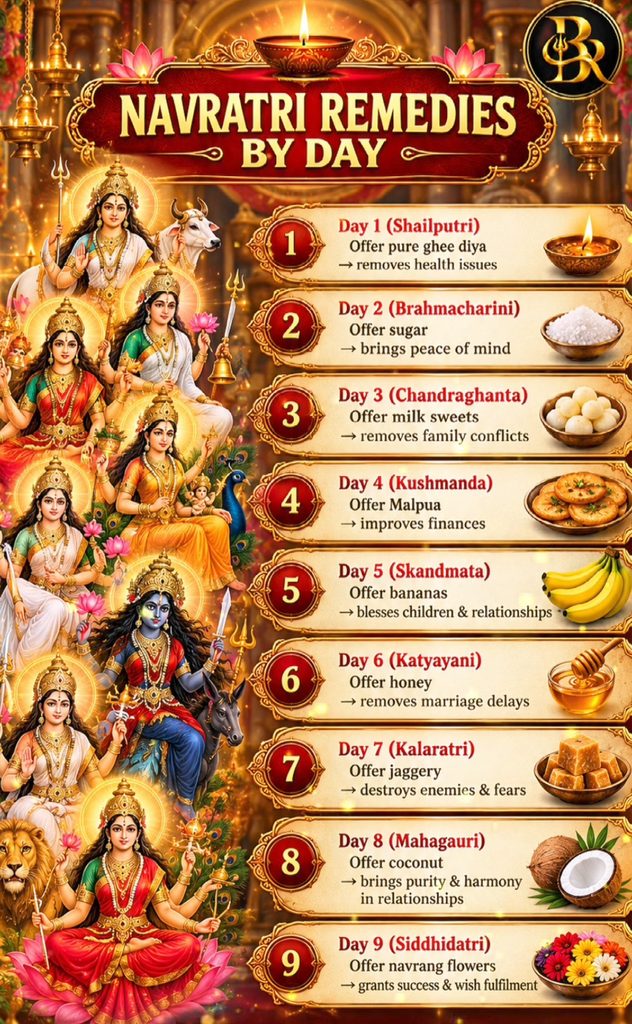
- Navratri 2026: Nine Days and Nine Forms of Maa Durga
Day Date Form of Maa Durga
1 11 October Maa Shailputri
2 12 October Maa Brahmacharini
3 13 October Maa Chandraghanta
4 14 October Maa Kushmanda
5 15 October Maa Skandamata
6 16 October Maa Katyayani
7 17 October Maa Kalaratri
8 18 October Maa Mahagauri
9 19 October Maa Siddhidatri
10 20 October Vijayadashami/Dussehra
Regional traditions can differ regarding colours, bhog and detailed rituals, so these should be treated as customary practices rather than compulsory rules.
- What Is Required for Ghatasthapana?
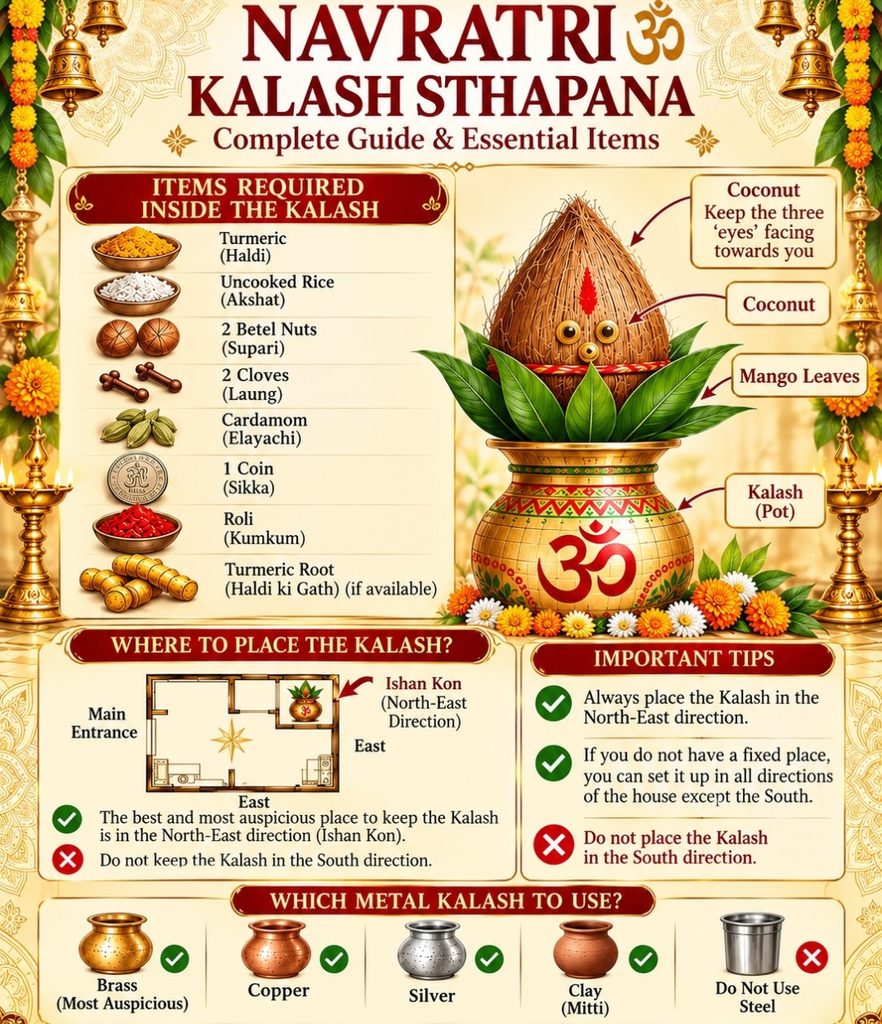
The basic puja samagri can include:
Clean kalash
Water
Coconut
Mango or other traditionally prescribed leaves
Betel nut/supari
Durva
Akshat (uncooked rice)
Coin
Moli/kalava
Red cloth
Roli/kumkum
Haldi
Flowers
Garland
Incense
Camphor
Ghee or oil lamp
Fruits
Sweets
Panchamrit
Devi’s picture or murti
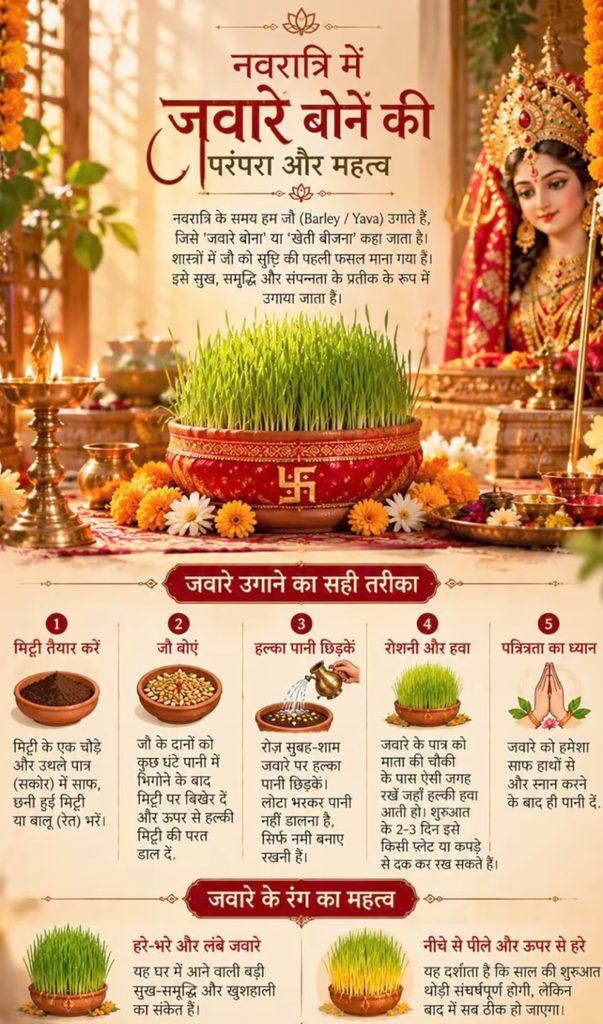
Barley/jau and soil for growing Navratri jow
Naivedya
Dakshina
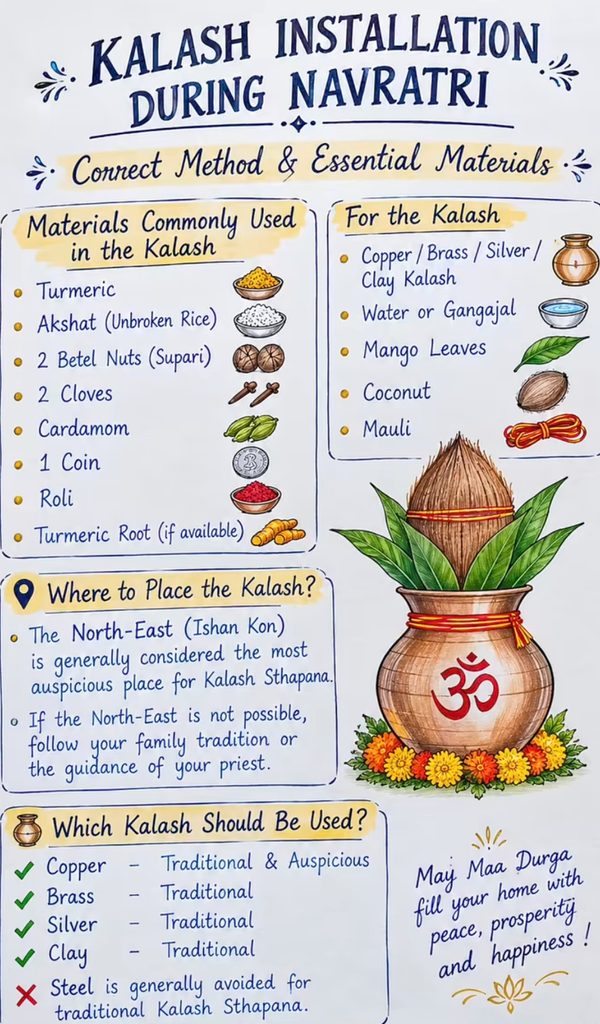
Traditional Ghatasthapana instructions include putting items such as supari, perfume, durva, akshat and a coin in the kalash water, placing leaves at the mouth of the kalash and keeping a coconut wrapped in red cloth and tied with moli on top.
- Why Are Coconut and Kalash Important?
The kalash represents auspiciousness, abundance and the presence of divine energy.
The water inside represents life. Rice, durva, flowers and other items symbolize prosperity, fertility and purity according to tradition.
The coconut placed on top is considered an important sacred offering. It is generally wrapped in red cloth and tied with moli before being placed on the kalash.
The purpose is not merely to decorate the puja. The complete kalash arrangement symbolically represents life, nature, fertility and Shakti.
- What Should Be Put in Kalash Water?
A simple traditional arrangement can include:
Clean water
A little Ganga water, if available
Akshat
Supari
Durva
A coin
A small amount of perfume/itr, according to family tradition
The important point is cleanliness and devotion, not collecting dozens of items. Different regional and family traditions use slightly different ingredients.
- How to Perform Navratri Puja Step by Step
Step 1: Clean the Puja Area
Clean the room and puja place in the morning. Take a bath and wear clean clothes.
Step 2: Prepare the Chowki
Place a clean red or yellow cloth on the chowki and install Maa Durga’s picture or murti.
Step 3: Prepare the Kalash
Fill the kalash with water and add the traditionally prescribed items. Place leaves around the mouth and put the coconut on top.
Step 4: Sankalp
Take water in your hand and make a simple sankalp:
“I am observing Navratri with devotion and according to my ability. May Maa Durga give strength, wisdom, health and peace to my family.”
Step 5: Light the Diya
Light a ghee or oil lamp. Some families maintain an Akhand Jyoti throughout Navratri. If you do this, keep the lamp in a safe, stable place away from curtains, children and combustible material. Traditional guidance commonly associates the lamp with the presence of Maa Durga.
Step 6: Offer Flowers
Offer flowers and a garland to Maa Durga.
Step 7: Offer Kumkum, Roli and Akshat
Apply or offer kumkum/roli and akshat according to your family tradition.
Step 8: Offer Naivedya
Offer fruit, milk, sweets or suitable sattvic food.
Step 9: Recite Mantra and Katha
Read the day’s Navadurga story or Durga Saptashati/Devi Mahatmya, according to your ability.
Step 10: Perform Aarti
Finish with Maa Durga’s aarti and distribute prasad.
- Which Mantra Can Be Chanted?
A simple and widely used mantra is:
“ॐ दुं दुर्गायै नमः”
Om Dum Durgayai Namah
You can chant it 11, 21, 51 or 108 times according to your time and tradition.
Another popular invocation is:
“या देवी सर्वभूतेषु शक्तिरूपेण संस्थिता।
नमस्तस्यै नमस्तस्यै नमस्तस्यै नमो नमः॥”
For a longer daily practice, devotees may read Durga Saptashati, Devi Kavach, Argala Stotra, Keelak Stotra and other traditional texts. If you cannot complete a long scripture every day, sincere prayer and a shorter mantra are also a practical way to maintain daily worship.
A traditional Durga invocation also begins with “सर्वमङ्गलमाङ्गल्ये…” and is used in Durga puja.
- Which Aarti and Chalisa Are Commonly Read?
During Navratri, families commonly sing:
Jai Ambe Gauri Aarti
Durga Maa ki Aarti
Durga Chalisa
Durga Saptashati
Devi Kavach
Argala Stotra
Siddha Kunjika Stotra, for those whose tradition includes it
There is no requirement that every devotee must recite every text. The best approach is to follow the family tradition and one’s capacity.
- What Is Worshipped Each Day?
The central deity changes according to the nine forms of Navadurga.
Day 1 – Maa Shailputri
Devotees pray for strength, stability and a pure beginning.
Day 2 – Maa Brahmacharini
Associated with tapasya, patience and determination.
Day 3 – Maa Chandraghanta
Worship is associated with courage, peace and protection.
Day 4 – Maa Kushmanda
Associated with energy, creation and vitality.
Day 5 – Maa Skandamata
Associated with motherhood and protection.
Day 6 – Maa Katyayani
Associated with courage and the destruction of negative forces.
Day 7 – Maa Kalaratri
Associated with protection from fear and darkness.
Day 8 – Maa Mahagauri
Associated with purity and peace.
Day 9 – Maa Siddhidatri
Associated with spiritual accomplishment and divine blessings.
- What Food Is Eaten During Navratri Fast?
Navratri food can actually be quite nutritious when prepared properly.
Common fasting foods include:
Sabudana
Samak rice
Kuttu
Rajgira
Singhara flour
Potatoes
Sweet potato
Pumpkin
Bottle gourd
Fruits
Milk/curd
Nuts and seeds
Makhana
Instead of repeatedly eating fried pakode, chips and excessive sabudana preparations, a healthier vrat plate can contain fruit, curd, vegetables, roasted makhana, nuts and an appropriate grain alternative.
A simple healthy vrat plate
Breakfast: fruit + milk/curd
Lunch: samak/kuttu + vegetable + curd
Evening: fruit or roasted makhana
Dinner: light vegetable/soup + suitable fasting food
People with diabetes, kidney disease, pregnancy, eating disorders or other medical conditions should not blindly undertake prolonged fasting; they should follow medical advice.
- Does Fasting for All Nine Days Have Health Benefits?
For some healthy adults, a carefully planned short-term fast can reduce excessive eating and encourage a more disciplined routine.
But Navratri fasting is not automatically healthy. Eating deep-fried vrat food several times a day can make the diet high in calories, fat and salt.
Also, there is no reliable nationwide statistic showing exactly what percentage of Indians fast for all nine days versus only one or two days. Practices vary greatly by region, family, age, health and religious tradition. Therefore, giving figures such as “70% keep all nine fasts” without a credible national survey would be misleading.
Many people keep all nine days, while others fast on the first and last day, Ashtami/Navami, or according to their family tradition.
- What Should Be Offered to Maa Durga?
Common offerings include:
Flowers: marigold, rose, hibiscus and other clean seasonal flowers.
Fruit: banana, apple, pomegranate, coconut and seasonal fruits.
Dry fruits: almonds, cashews, raisins, makhana etc.
Coconut: offered whole or as prasad.
Sweets: homemade sattvic sweets such as halwa, kheer or other traditional preparations.
Water: clean water and, where customary, Ganga water.
Panchamrit: milk, curd, ghee, honey and sugar, according to tradition.
The exact bhog differs between regions and temples.
- What Happens on Ashtami and Navami?
For many families, Ashtami or Navami is the main concluding day of Navratri worship.
People may perform:
Special Durga puja
Havan
Kanya Puja
Kanya Bhoj
Bhog
Aarti
Dakshina
Distribution of prasad
Some families perform Kanya Puja on Ashtami and others on Navami.
- How Is Kanya Puja Done?
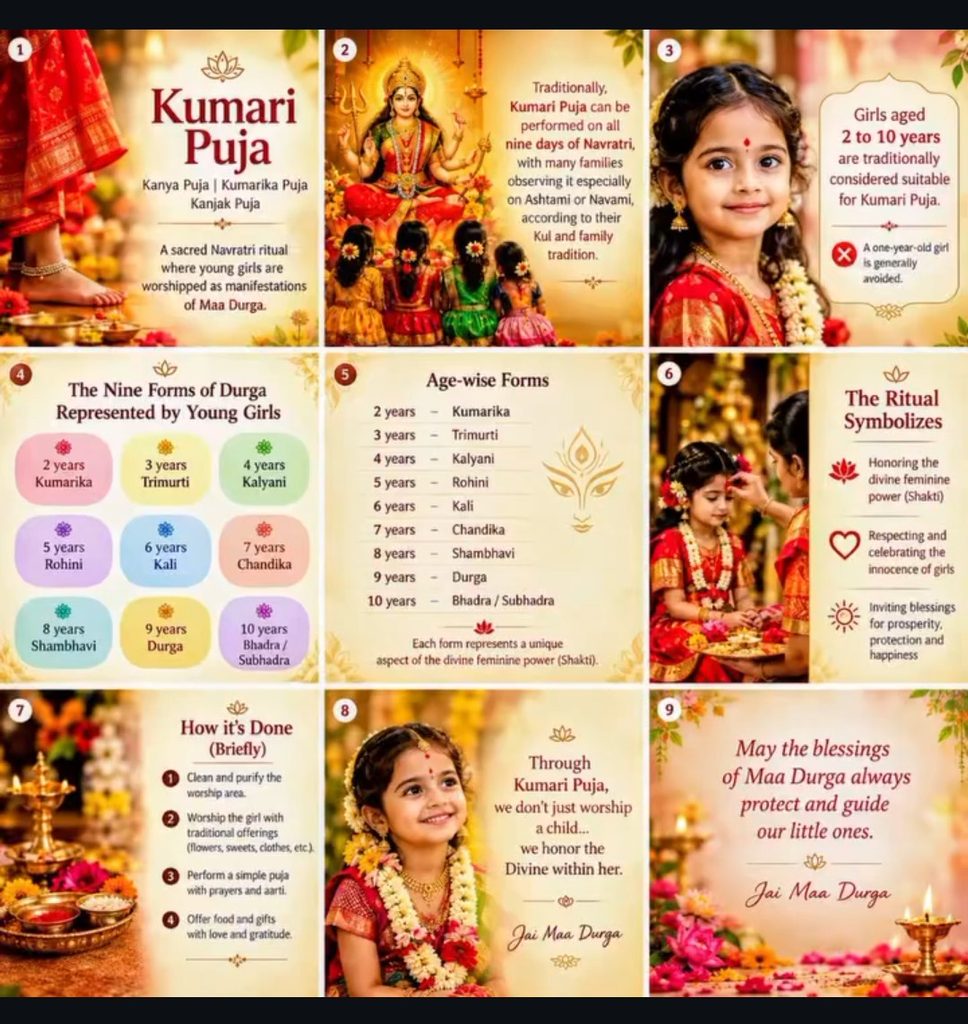
Young girls are traditionally welcomed as symbolic forms of the Goddess.
A simple sequence is:
Invite the girls respectfully.
Wash their feet if this is your family tradition.
Offer them a clean seat.
Apply roli/kumkum.
Offer flowers.
Serve sattvic food.
Give fruit or sweets.
Offer dakshina or a useful gift.
Take blessings respectfully.
Perform aarti if part of your family custom.
The most important thing is respect. Kanya Bhoj should not become merely a ritual of feeding children while ignoring their dignity.
- What Should Be Done With Havan Samagri Afterwards?
After the havan, do not throw the remains randomly into a river, lake or public place.
Allow the havan ash to cool completely.
Then, according to local custom, it may be:
respectfully placed at the base of a suitable plant/tree,
kept in a clean sacred place,
or disposed of according to the instructions of the family priest.
Avoid putting large quantities of ash, plastic, foil, flowers or other puja waste into natural water bodies.
This is especially important today because respect for nature should also be part of religious practice.
- Which Temples Do People Like to Visit During Navratri?
Different parts of India have different favourites.
Popular pilgrimage destinations include:
Mata Vaishno Devi – Katra
Navratri is a particularly busy pilgrimage period for Vaishno Devi. Special railway services are even arranged during the 2026 Navratri rush.
Kamakhya Temple – Assam
Kamakhya has a distinctive Shakti tradition, and Durga Puja during Navratri is an important festival at the temple.
Ambaji – Gujarat
The temple is especially important for Shakti worship, while Gujarat is also famous for its Navratri Garba tradition.
Vindhyavasini – Uttar Pradesh
Many devotees visit Vindhyachal during Navratri.
Jwala Ji – Himachal Pradesh
The temple is famous for its sacred flame tradition.
Mansa Devi and Chandi Devi – Haridwar
These Shakti temples also receive many devotees during the festival.
There is no single reliable national percentage showing which temple is preferred by all Navratri devotees. Preferences are strongly regional and depend on distance, family tradition and pilgrimage customs.
- What Happens on Dussehra?
20 October 2026 is Vijayadashami/Dussehra.
Dussehra has more than one major religious tradition.
In North India, it is strongly associated with Lord Rama’s victory over Ravana. Ramlila performances and Ravana effigy burning are common.
In the Durga tradition, the tenth day represents Maa Durga’s victory over Mahishasura.
Therefore, the underlying message is similar:
Dharma defeats adharma.
- Which Puja Is Done on Dussehra?
Depending on the family and region, people may perform:
Maa Durga puja
Rama puja
Shastra puja
Vehicle puja
Business/workplace puja
Books and tools puja
Ayudha Puja in some regions
Shami tree worship in some traditions
The exact custom changes from state to state.
- What Food Is Prepared on Dussehra?
There is no single Dussehra menu for the entire country.
Families may prepare:
Puri
Halwa
Chana
Kheer
Sabzi
Poori-aloo
Traditional sweets
Regional festive dishes
In many North Indian homes, halwa, puri and kala chana are particularly associated with Kanya Puja/Navratri concluding rituals.
- Complete Navratri Routine in Simple Steps
Morning
Wake up early.
Bathe and wear clean clothes.
Clean the puja place.
Light diya.
Offer water/flowers.
Pray to the day’s form of Maa Durga.
Chant mantra.
Read katha or Durga Saptashati according to your practice.
Daytime
Maintain a sattvic routine.
Eat appropriate vrat food if fasting.
Avoid unnecessary anger, arguments and harmful habits.
Help someone or give charity if possible.
Evening
Clean the puja area.
Light diya.
Offer flowers and bhog.
Read the day’s katha.
Perform Durga Aarti.
Distribute prasad.
Ashtami/Navami
Perform special puja.
Kanya Puja/Bhoj if your tradition follows it.
Perform havan if desired and if you know the proper procedure.
Complete the vrat according to your family tradition.
Dussehra
Perform Vijayadashami/Rama/Durga or Shastra Puja according to tradition.
Take blessings of elders.
Share prasad.
Remember the deeper message of the festival—victory of good over evil and discipline over uncontrolled desires.
Final Thought
Sharad Navratri is beautiful because it connects puja, fasting, family, food, charity, nature and spiritual discipline. The value of the festival is not measured by how many expensive items are placed before Maa Durga. A simple kalash, a diya, a flower, clean food and sincere prayer can also become meaningful worship.
The real Navratri begins when a person tries to remove anger, greed, ego and negativity from daily life. Maa Durga is worshipped outside through rituals, but Shakti is also discovered inside through courage, self-control, compassion and dharma.