




Microphone: The Small Device That Has Become Essential in Life
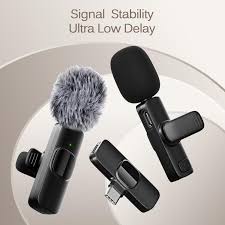
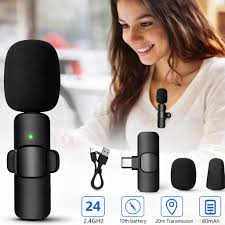
Today, the microphone has become such a common device that we often do not even notice how important it is. In education, politics, religious programs, hospitals, news reporting, entertainment, business meetings, social media, YouTube, podcasts, weddings, public performances and even mobile phones, microphones are being used everywhere.
A microphone has one simple job: to convert sound into an electrical or digital signal so that the sound can be recorded, transmitted, processed or made louder.
But modern microphones are no longer just simple devices that make a person’s voice louder. New microphones can reduce unwanted noise, detect the direction of a person’s voice, work wirelessly, connect to smartphones, record sound digitally and work together with software and AI-based processing.
The Indian microphone market itself is growing. One market estimate puts India’s microphone-market revenue at about US$302.6 million in 2024, with a projection of about US$477.9 million by 2030. The same estimate says USB microphones are among the faster-growing connectivity segments.
So, why has this small device become so important?
- Where Are Microphones Used Today?
Microphones can now be found in almost every area of modern communication.
Education
Teachers use microphones in:
Schools
Colleges
Universities
Online classes
Seminars
Training programs
Large lecture halls
A microphone allows a teacher to speak without continuously shouting.
Politics
Political rallies, press conferences, public meetings and election campaigns commonly use microphones.
A politician may speak to thousands of people, and the microphone sends the voice to amplifiers and loudspeakers.
Religion and Puja
Microphones are commonly used in:
Temple programs
Bhajan
Kirtan
Religious lectures
Aarti
Ram Katha
Bhagwat Katha
Public religious gatherings
The microphone allows a speaker or singer to reach a large audience.
Medical Field
Microphones are also used in medical and healthcare technology, although their role is different from a public-address microphone.
They can be found in:
Hearing-related devices
Medical recording equipment
Telemedicine
Voice-controlled systems
Patient communication systems
Some diagnostic and monitoring equipment
News and Journalism
News reporters often carry microphones because interviews can take place in noisy public areas.
A microphone allows the reporter’s voice and the interviewee’s voice to be recorded more clearly.
- Why Does a Microphone Sometimes Make a Voice Sound Very Loud?
A microphone itself does not usually create the entire loud sound.
The basic process is:
Human voice → Microphone → Electrical/Digital signal → Mixer/Processor → Amplifier → Speaker → Loud sound
The microphone captures the sound.
The amplifier increases the signal.
The speaker converts the electrical signal back into sound waves.
This is why a person speaking normally can sometimes be heard by thousands of people.
However, simply increasing volume is not always the answer. If the gain is too high, the system can produce distortion or feedback.
- Why Does a Microphone Become a “Weakness” or Necessity?
In modern life, people have become accustomed to amplified communication.
At a small gathering, a person may be able to speak without a microphone.
But at a large event, a microphone becomes almost essential.
This creates an interesting change in human communication: we have become dependent on technology to make our natural voice reach larger audiences.
This is not necessarily bad. It allows one teacher, speaker, reporter or performer to communicate with many people.
The important thing is to use it responsibly and at a reasonable volume.
- Main Types of Microphones
There is no single microphone that is best for every purpose.
A. Dynamic Microphone
Dynamic microphones are strong and commonly used for:
Stage performances
Public speaking
News reporting
Singing
Outdoor events
A typical dynamic microphone uses a diaphragm, voice coil and magnet to convert sound into an electrical signal.
They are popular because they can be physically durable and can handle loud sound levels.
B. Condenser Microphone
Condenser microphones are often used when detailed sound capture is important.
They are common in:
Studios
Podcasts
Music recording
Voice-over work
Professional content creation
A condenser microphone commonly uses a thin metallized plastic diaphragm and requires electrical power in its operating circuit.
C. Lavalier Microphone
This is the small microphone that can be clipped onto clothing.
It is particularly useful for:
News reporting
Interviews
Teaching
Presentations
YouTube videos
Reels
Public speaking
Its biggest advantage is that the microphone can remain close to the speaker’s mouth.
D. Shotgun Microphone
A shotgun microphone is designed to focus more strongly on sound coming from a particular direction.
It is widely used in:
Film production
Television
Outdoor video
Documentary production
Cameras
E. Wireless Microphone
Wireless microphones send audio through radio/wireless technology rather than requiring a traditional cable between the microphone and receiver.
They are convenient for:
Stage performances
Presentations
Religious events
Television
Interviews
Content creation
F. USB Microphone
USB microphones connect directly to computers and other compatible devices.
They have become particularly useful for:
Podcasts
Online meetings
Streaming
Gaming
YouTube
Voice recording
India’s microphone-market data indicates that USB connectivity is among the faster-growing segments.
- Which Size of Microphone Is Most Useful?
There is no universal “best size.”
The correct size depends on the purpose.
Small microphones
Small microphones are useful for:
Mobile phones
Earbuds
Lavalier systems
Smart devices
Wearable technology
Cameras
Hidden or compact installations
MEMS microphones can be extremely small. Modern MEMS microphone packages can be only a few millimetres in size.
Medium-sized microphones
These are commonly useful for:
Interviews
Singing
Presentations
News reporting
Events
Large microphones
Larger microphones may be used in professional recording or specialized applications.
But larger does not automatically mean louder or better.
A small microphone can sometimes outperform a large microphone because microphone quality depends on the capsule, electronics, design, sensitivity, frequency response, noise performance and processing.
- Does a Bigger Microphone Give a Louder Voice?
Not necessarily.
The loudness ultimately depends on the entire audio system.
A small microphone with good sensitivity and good electronics can produce an excellent signal.
A large, cheap microphone can produce poor sound.
Therefore:
Size ≠ Quality
and
Size ≠ Loudness
This is an important point because many people assume that a physically larger microphone must be more powerful.
- Which Microphone Gives a Stronger and Clearer Voice?
For speech, the best microphone depends on the environment.
For example:
A handheld dynamic microphone can be excellent for a stage.
A lavalier microphone can be excellent for a presenter.
A shotgun microphone can be useful for video.
A condenser microphone can be excellent for studio recording.
A microphone array can help when voice direction and background noise are important.
The microphone should therefore be selected according to the job, not simply according to its size or price.
- What Is the Most-Sold Microphone Brand?
There is no single reliable public statistic that proves one brand is the most-sold microphone brand across all of India and all categories.
The market is divided into many categories and price ranges.
Professional users may choose brands such as:
Shure
Sennheiser
Audio-Technica
AKG
RØDE
Consumer and creator markets also contain many other brands, including lower-cost and Indian-market brands.
So it would be misleading to say that one particular company sells the most microphones everywhere without specifying the category, country, sales channel and period.
- Why Do News Reporters Carry Microphones?
The microphone is part of the reporter’s basic working equipment.
A reporter may need to record an interview:
On a street
At an airport
At a political event
Outside a court
At a press conference
During a disaster or emergency
At a sports event
The reporter needs a microphone that can capture speech clearly despite background noise.
That is why microphones remain extremely important in journalism even in the smartphone era.
- Does AI Work Inside a Microphone?
This is one of the most interesting developments.
The answer is:
Sometimes yes, but not necessarily inside the physical microphone capsule itself.
A traditional microphone mainly converts sound into an electrical signal.
AI or advanced digital processing can then be performed by:
A microphone’s internal processor
A wireless transmitter
A camera
A smartphone
A computer
An audio processor
Cloud software
Modern microphone systems can use AI or machine-learning-based processing for:
Noise reduction
Voice isolation
Echo cancellation
Automatic gain control
Speech enhancement
Voice activity detection
Transcription
Speaker detection
Modern MEMS microphones are increasingly designed for systems using AI and voice interfaces. Multiple microphones can also be combined to improve voice pickup and noise rejection.
- How Does AI Help a Microphone?
Imagine a reporter standing beside a busy road.
There may be:
Voice + traffic + horns + wind + people talking + machinery
A normal microphone may capture all of these sounds.
A modern system can analyse the audio and attempt to identify the important speech while reducing unwanted sounds.
This can make the recording easier to understand.
However, AI cannot magically remove every unwanted sound without affecting the original voice. The quality depends on the microphone, environment, algorithms and processing power.
- What Is Beamforming?
Beamforming is another important technology.
Imagine four microphones placed together.
All four microphones hear the same speaker, but the sound reaches each microphone at slightly different times.
Software can compare these signals.
It can then emphasize sound coming from one direction and reduce sound coming from other directions.
This is called beamforming.
Microphone arrays using beamforming are used in voice-interaction systems and professional audio equipment.
This is one reason why modern devices can sometimes hear a person clearly even when several people are talking nearby.
- Can AI Make Human Work Faster?
Yes, when used correctly.
For example, a microphone can capture a meeting and software can:
Record the conversation.
Convert speech into text.
Separate or identify speakers in some systems.
Remove unwanted noise.
Create a transcript.
Help summarize the conversation.
Search the recorded information.
This can save time for journalists, teachers, researchers, businesses and content creators.
But technology should assist humans rather than remove human responsibility.
A machine-generated transcript or summary should still be checked when accuracy matters.
- Can a Microphone Have a Camera?
Yes.
There are modern devices that combine microphones and cameras.
For example, a conference device may contain:
Camera
Multiple microphones
Speakers
AI processing
Noise cancellation
Automatic framing
Voice tracking
The camera can detect where people are sitting, while microphone arrays can help determine where speech is coming from.
Some modern consumer devices also combine microphones with cameras or other sensors.
So the future device may not be simply a “microphone.”
It may become a complete communication sensor.
- What Additional Features Can Be Added to a Microphone?
Modern microphones can include many additional features.
Possible features include:
AI noise reduction
Echo cancellation
Beamforming
Automatic gain control
Voice activity detection
Built-in recording
Bluetooth or wireless connectivity
USB-C
Internal memory
Battery
Digital display
Wind protection
Multiple microphone capsules
Safety-track recording
Automatic voice enhancement
Smartphone integration
Some current wireless microphone systems already combine AI-based noise reduction with multiple connection options and different physical microphone configurations.
- What Is MEMS Microphone Technology?
MEMS means Micro-Electro-Mechanical Systems.
It is one of the most important technologies behind tiny modern microphones.
MEMS microphones can integrate a miniature mechanical sensing structure with electronic circuitry in a very small package.
They are widely suited to:
Smartphones
Earbuds
Smart speakers
Wearable devices
Cars
IoT devices
Voice-controlled equipment
Their small size and low power consumption make them particularly useful in modern electronics.
- What Materials Are Microphones Made From?
A microphone is not made from one material.
Different parts can use different materials.
Outer body
Depending on the product, the body may use:
Metal
Aluminum
Steel
Zinc alloys
Engineering plastics
Plastic
Engineering plastics such as ABS and other specialized polymers can be used for housings and components, depending on the design.
Diaphragm
The diaphragm is a very important part.
Depending on microphone type, it can use:
Metallized polymer film
Thin plastic materials
Metal
Other specialized materials
Condenser microphone diaphragms are commonly made from metallized plastic film.
Magnetic system
Dynamic microphones commonly use a magnet and voice coil.
Electronic components
Modern microphones may contain:
Semiconductor chips
Capacitors
Resistors
Printed circuit boards
Analog-to-digital converters
Digital interfaces
- Why Does Water Damage a Microphone?
Water and electronics generally do not work well together.
Water can cause:
Short circuits
Corrosion
Oxidation
Damage to electronic components
Diaphragm problems
Connector problems
Battery damage
Poor sound
Permanent failure
However, some microphones are specially designed to resist moisture, dust or water.
Modern MEMS technology is also being developed with improved resistance to harsh environments. Some new designs use sealed structures specifically to improve protection against dust and moisture.
But ordinary microphones should not be assumed to be waterproof.
- What Can Damage a Microphone?
The most common causes include:
Water and moisture
Physical impact
Dropping the microphone
Excessive dust
Very high sound pressure
Damaged cables
Bad connectors
Battery leakage
Excessive heat
Poor storage
Corrosion
Incorrect electrical connections
Overloading the audio input
Poor-quality wireless equipment
Rough handling
A microphone that is treated carefully can last for many years.
- How Many Years Can a Microphone Last?
There is no fixed lifespan.
A good professional microphone can potentially remain usable for many years—even decades—if it is maintained properly.
However, wireless microphones may require battery replacement, and electronic components can eventually fail.
The actual life depends on:
Brand
Build quality
Usage
Environment
Moisture
Handling
Battery condition
Cable quality
Repairs
Storage
Therefore, saying “every microphone lasts exactly five or ten years” would be incorrect.
- Are Chinese Microphones Used in India?
Yes.
India’s microphone market includes products manufactured in China and other countries, as well as products from international brands and products assembled or manufactured through different supply chains.
Chinese manufacturing has become important in consumer electronics because it can produce large quantities at competitive prices.
This does not mean that every Chinese microphone is low quality.
There are very inexpensive products as well as sophisticated professional-grade components and devices manufactured in China.
Quality depends on the design, components, manufacturing standards and quality control—not simply on the country printed on the product.
- Does India Import and Export Microphones?
Yes.
India participates in international trade involving microphones and related audio equipment.
Market research on India also tracks microphone import shipments, and reports indicate continuing growth in microphone-related imports.
However, there is no single meaningful percentage of “India’s microphones that are imported” that can be stated without defining exactly what is being measured.
For example, the percentage could mean:
Number of units
Import value
Finished microphones
Microphone components
Professional microphones
Consumer microphones
Wireless systems
These produce very different numbers.
Therefore, a precise percentage should come from a defined customs classification and a specific year.
- How Many People Buy a Microphone Every Day?
It would be misleading to provide an exact number of Indians who purchase microphones every day because there is no universally available public daily-sales database covering every physical shop, online marketplace, professional supplier and institutional purchase.
But the growing Indian microphone market shows that demand is significant.
Microphones are purchased by:
Students
Teachers
YouTubers
Journalists
Musicians
Religious organizations
Event companies
Schools
Offices
Businesses
Government institutions
Television organizations
Film producers
Podcasters
Gamers
Content creators
- Why Are Small Microphones Becoming More Popular?
Small size has become important because modern technology is moving toward portability.
People want equipment that can fit inside:
Smartphones
Cameras
Earbuds
Smartwatches
Laptops
Cars
Wearable devices
MEMS microphones are especially useful because they can be extremely small and consume little power.
So the future is not necessarily about making microphones physically bigger.
It is about making them smaller while making their performance smarter and better.
- Is a Small Microphone Better Than a Large One?
Not automatically.
A small microphone can be better for:
Mobile use
Wearables
Interviews
Cameras
Wireless systems
Hidden installation
Portable recording
A larger professional microphone may be better for:
Studio recording
Certain vocal applications
Professional broadcasting
Specialized recording
The correct question is not:
“Which microphone is bigger?”
The better question is:
“Which microphone is designed for this particular job?”
- Can a Microphone Work Without a Wire?
Yes.
Wireless microphones use a transmitter and receiver.
The microphone converts sound into an electrical signal, and the transmitter sends the signal wirelessly to a receiver.
The receiver then sends the audio into the sound system.
Modern wireless systems can be very compact and can connect with cameras, smartphones and computers.
- Can a Microphone Record Directly?
Some modern microphones and wireless microphone systems can contain internal storage or recording functions.
This is useful because if the wireless signal experiences interference, the local recording can sometimes provide a backup.
This type of feature is becoming increasingly useful for journalists and content creators.
- Can a Microphone Recognize a Person’s Voice?
A microphone itself primarily captures sound.
Voice recognition is generally performed by software and processors.
Modern systems can analyse:
Voice patterns
Speech
Direction
Background noise
Voice activity
With appropriate software, recorded speech can also be converted into text.
This is where microphones and modern computing increasingly work together.
- Could Future Microphones Become “Smart”?
Yes, this is already happening.
A future microphone may be able to:
Listen → Identify → Filter → Understand → Record → Transcribe → Communicate
For example, a meeting device could automatically recognize that a person is speaking, reduce background noise, record the discussion and create a searchable transcript.
This does not mean the microphone itself understands everything.
It means the microphone, processor and software work together.
- What Is the Future of Microphones?
The future is likely to focus on five major areas:
- Smaller size
Microphones will continue becoming smaller.
- Better noise reduction
Systems will become better at separating speech from unwanted sounds.
- More microphone arrays
Instead of one microphone, devices may use several microphones together.
- More AI-assisted processing
AI and advanced signal processing will increasingly help with speech enhancement, transcription and voice detection.
- More integration
Microphones will increasingly become part of cameras, cars, earbuds, smartphones, smart home devices, conference systems and wearable technology.
- The Most Important Thing: Microphone Quality Is Not Just About Loudness
Many people think:
“A good microphone is one that produces a very loud voice.”
That is not correct.
A good microphone should ideally provide:
Clear speech
Appropriate sensitivity
Low unwanted noise
Good frequency response
Suitable directionality
Low distortion
Reliability
Good build quality
Compatibility with the equipment
A microphone that is extremely loud but produces distorted or noisy audio is not necessarily a good microphone.
- A Simple Example From Daily Life
Imagine a teacher standing in front of 500 students.
Without a microphone, the teacher may have to speak loudly.
With a microphone:
Teacher’s voice → Microphone → Audio processor → Amplifier → Speakers → Students
Now imagine the same system becoming smarter.
The microphone array detects the teacher’s direction.
Noise cancellation reduces unwanted sounds.
Automatic gain keeps the voice at a suitable level.
Software records the lecture.
Speech recognition creates a transcript.
Students can later search the lecture.
This shows how a simple microphone can become part of a much larger technology system.
- Final Conclusion
The microphone looks like a small device, but its importance in modern society is enormous.
It has moved from simple public-address systems to smartphones, cameras, medical technology, cars, computers, smart speakers, wireless systems and professional broadcasting.
The future microphone will probably not simply be a device that makes a voice louder.
It will increasingly become a smart sound sensor capable of working with multiple microphones, digital processing, beamforming, noise reduction and AI-assisted systems.
At the same time, humans will remain important.
Technology can help us hear better, record better and communicate faster, but the quality of communication still depends on the person speaking, the information being shared and the responsible use of technology.
The microphone may become smaller, smarter and more powerful, but its basic purpose will remain the same:
to help one human voice reach another human being.