
Moringa: Why Is This Simple Tree Becoming a Global Health
There was a time when moringa was simply known in many Indian homes as the drumstick tree. Its long pods were cooked as a vegetable, its leaves were sometimes added to food, and the tree was often growing around villages, farms and home gardens.
Today, the picture is changing.
Moringa is being sold as leaf powder, capsules, tea, food ingredients, oil and other wellness products. Farmers are also looking at it as a commercial crop, while international markets are showing growing interest in moringa-based products.
From Leaves to Seeds, Why Is the World Suddenly Interested in Moringa?
So a natural question comes to mind:
What is actually so special about moringa?
Is it really a “miracle plant”? Can its leaves provide important nutrients? Can people eat it every day? Is moringa useful only as food, or is it also used in medicine, cosmetics, soap and shampoo?
The reality is interesting—but it is also important not to exaggerate its benefits.
- What Exactly Is Moringa?
Moringa is mainly known scientifically as Moringa oleifera.
In India, it is commonly associated with the drumstick tree or sahjan.
It is a fast-growing tree that originated in the Indian subcontinent and is now cultivated throughout many tropical regions of the world. FAO describes it as a multipurpose tree whose different parts can be used as food, herbal products, fodder, fuelwood, gum and even in water-purification applications.
So moringa is not a grass.
It is a small tree or shrub.
And it is not limited to India.
It can grow in many warm tropical and subtropical parts of the world.
- Where Does Moringa Grow?
Moringa is particularly suited to warm climates.
It is cultivated in different parts of:
India
Africa
Southeast Asia
South Asia
Parts of the Middle East
Latin America
Other tropical and subtropical regions
It is known for growing relatively quickly and tolerating dry conditions better than many crops.
That is one reason it has attracted interest from farmers and development organisations.
Moringa does not require the same environmental conditions as crops that need cool temperatures.
So the answer is:
No, moringa does not grow only in India.
India is its native region and an important producer, but the tree has spread widely around the tropical world.
- Why Are People Calling Moringa a “Superfood”?
The biggest reason is its nutritional composition.
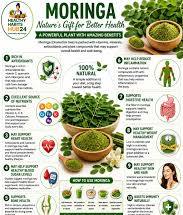
Moringa leaves contain protein, fibre, minerals, carotenoids and several vitamins and other plant compounds.
Research has reported nutrients including:
Vitamin A-related carotenoids
Vitamin C
Several B vitamins
Vitamin E
Calcium
Potassium
Magnesium
Iron
Protein
Dietary fibre
Various polyphenols and other phytochemicals
However, nutritional values can vary considerably depending on the variety, soil, climate, season, harvesting and processing method.
That is why it is better to call moringa a nutritious food rather than claiming that it can replace every other food or medicine.
- What Is Found in Moringa Leaves?
Moringa leaves are particularly interesting.
Research has found that fresh leaves contain protein and minerals, while dried leaves become much more concentrated because water is removed.
For example, one nutritional analysis reported protein levels of roughly 23–29% in dried leaves, while fresh leaves contain significant vitamin C, calcium, phosphorus and potassium.
Another review reports a range of vitamins and minerals, including vitamins A, C, E and some B vitamins, although values vary between studies.
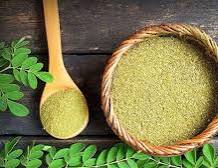
This is why moringa leaf powder has become popular.
A small quantity of dried leaf powder can contain a concentrated amount of nutrients compared with fresh leaves.
- Can We Eat Moringa Leaves Directly?
Yes.
Moringa leaves can be used as a food.
They can be:
Cooked as a vegetable
Added to dal
Added to soups
Mixed into vegetables
Used in chutneys
Dried and powdered
Added to certain food preparations
Used as tea or an ingredient in beverages
But the taste is not exactly like spinach.
Moringa leaves can have a slightly bitter, earthy and green flavour.
Some people enjoy the taste.
Others need time to get used to it.
Research on food products has specifically noted bitterness as one of the challenges in making moringa-based foods more acceptable.
- What About Moringa Flowers?
Moringa flowers are also edible in traditional food preparations.
They can be cooked in different ways depending on the region.
The flowers are not usually the first part people think about when they hear “moringa,” but they are another example of why this tree is considered multipurpose.
- What About the Drumstick Pods?
The long green pods are perhaps the most familiar part of the tree in India.
These are commonly called drumsticks.
They are used in:
Sambar
Curries
Soups
Vegetable dishes
Regional Indian recipes
The pods are not simply a medicinal product.
They are an ordinary food that has been eaten for generations.
- Can the Seeds Also Be Used?
Yes.
Moringa seeds contain oil, often called moringa oil or ben oil.
FAO notes that the seeds contain a substantial amount of edible oil.
Moringa seed oil has attracted interest in:
Cosmetics
Personal-care products
Traditional applications
Food-related uses
Industrial applications
So the tree can provide value beyond its leaves.
- What About the Roots?
This is where people need to be more careful.
Different parts of moringa have been used traditionally, including roots.
But “the whole tree is useful” does not mean every part should be eaten casually or used as a home medicine.
The leaves and pods are much more familiar as food.
Concentrated extracts, roots and other medicinal preparations should be treated differently from ordinary vegetables.
If someone wants to use a concentrated moringa preparation for a health condition, professional advice is sensible.
- Why Is Moringa Used in Health Products?
Moringa leaves contain numerous bioactive plant compounds, including polyphenols, flavonoids, carotenoids and glucosinolates.
Researchers are studying these compounds for antioxidant, anti-inflammatory and other biological activities.
This has created interest in moringa as a nutraceutical and functional-food ingredient.
But there is an important difference between:
“Moringa contains compounds being studied for health effects”
and
“Moringa cures every disease.”
The first statement is supported by research.
The second is an exaggeration.
- Can Moringa Be Used to Make Medicines?
Moringa compounds are being investigated for possible pharmaceutical and therapeutic applications.
Research has examined areas including:
Blood sugar
Inflammation
Oxidative stress
Cardiovascular health
Liver-related conditions
Other chronic diseases
But much of the evidence is still from laboratory and animal studies, or from limited human studies.
More high-quality clinical research is needed before moringa can be considered a proven treatment for specific diseases.
Therefore, moringa should not be used as a replacement for prescribed treatment for serious illnesses.
- Can Moringa Powder Be Taken Directly?
Moringa leaf powder is commonly consumed as a food or dietary supplement.
People may mix it into:
Water
Smoothies
Dal
Soups
Vegetables
Curd or other foods
However, there is no universal rule saying that everyone should consume a particular amount every day.
The appropriate amount depends on the product, concentration, diet and individual circumstances.
More is not necessarily better.
- Can Everyone Take Moringa Every Day?
Not necessarily.
A healthy adult may use moringa leaves as part of a balanced diet, but concentrated supplements are different from eating vegetables.
People who are pregnant, breastfeeding, taking regular medicines, have chronic illnesses, or are considering high-dose extracts should consult a healthcare professional.
This is particularly important because herbal products can have biological effects and may interact with medicines.
So the simple rule is:
Food quantities and concentrated medicinal extracts should not be treated as the same thing.
14. Can Moringa Reduce Pollution?
This is an interesting question.
Moringa is a tree, so like other plants it participates in photosynthesis and contributes to carbon storage and the local ecosystem.
Trees can provide environmental benefits through:
Carbon capture
Shade
Soil protection
Biodiversity support
Reduction of heat around local areas
Moringa is also drought-tolerant and fast-growing, which makes it attractive in some environmental and agricultural contexts.
But we should not claim that simply planting moringa will solve city air pollution.
Moringa can be part of green development, but it is not a substitute for controlling vehicle emissions, industrial pollution, construction dust and other pollution sources.
15. Is Moringa Used in Soap and Shampoo?
Yes, moringa-derived ingredients are used in personal-care and cosmetic products.
Moringa oil, extracts and other plant-derived ingredients can be found in some:
Soaps
Hair products
Skin-care products
Cosmetic formulations
The reason is that moringa contains oils and bioactive plant compounds that are attractive to the personal-care industry.
However, the presence of moringa in a cosmetic product does not automatically prove that the product will produce a particular medical or beauty result.
- Why Is Moringa Becoming a Business Opportunity?
This is one of the most interesting parts of the story.
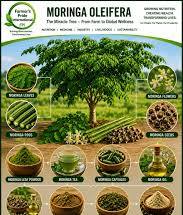
One tree can generate multiple products:
Leaves → fresh vegetables
Leaves → dried leaves
Leaves → powder
Seeds → oil
Pods → food
Flowers → food preparations
Plant extracts → research and commercial products
This creates opportunities for farmers, processors, exporters, food companies and wellness businesses.
APEDA’s market intelligence has identified moringa leaf powder and moringa oil among major export products and noted growing international demand for moringa-based dietary supplements.
- Is India Exporting Moringa?
Yes.
India has a growing moringa export market.
APEDA data in its medicinal-plant product analysis shows moringa exports increasing from 129 tonnes in FY2020 to 195 tonnes in FY2024 under the relevant medicinal-plant product category.
Trade-data providers also report substantial recent shipments of Indian moringa powder and moringa-based products.
For example, one 2025 report estimated Indian moringa powder exports at about US$23.85 million in FY2024–25, while another market report cited growth from roughly US$16 million in FY2023–24 to US$21 million in FY2024–25. Because these figures come from different trade-data classifications, they should not be treated as perfectly interchangeable.
So the larger picture is clear:
International demand for Indian moringa products is growing.
18. Which Countries Are Interested in Moringa?
The United States is an important market for moringa-related products.
Other markets include parts of:
Europe
Japan
Canada
Australia
The Middle East
Southeast Asia
APEDA’s market intelligence specifically identifies the US, Western Europe and Japan as important markets for dietary supplements and botanical products, with moringa leaf powder among the products gaining attention.
- What Percentage of People in India Eat Moringa?
This is one question where we should not invent a number.
There is no reliable nationwide percentage available that tells us exactly what percentage of Indians regularly consume moringa leaves or moringa powder.
Moringa consumption varies greatly by:
Region
Rural versus urban population
Food culture
Age
Income
Awareness
Availability of the plant
It is therefore better to say that moringa is traditionally consumed in parts of India and is increasingly marketed as a health product, rather than claiming that a specific percentage of Indians consume it.
- Why Are Foreign Countries Interested in an Indian Tree?
There are several reasons.
First, people worldwide are increasingly interested in plant-based foods.
Second, moringa has a strong nutritional profile.
Third, the tree grows well in warm climates.
Fourth, multiple parts of the plant can be commercially used.
Fifth, dried leaf powder is relatively convenient to transport and incorporate into food products.
So something that was once an ordinary village tree can become an international commercial product.
- Is Moringa a Medicine or a Food?
It can be both a food ingredient and a source of compounds studied for medicinal applications, but those are not the same thing.
Eating moringa leaves as a vegetable is fundamentally different from taking a concentrated moringa extract marketed as a supplement.
This distinction is very important.
A food can provide nutrients.
A medicine is intended to produce a therapeutic effect and should be evaluated for effectiveness, dose and safety.
Moringa should therefore not be marketed as a replacement for all medicines.
- Can Moringa Provide All the Nutrients the Body Needs?
No.
This is another popular exaggeration.
Moringa contains many nutrients, but the human body needs a balanced diet containing different foods.
We need a combination of:
Grains or other carbohydrate sources
Pulses and proteins
Vegetables
Fruits
Healthy fats
Adequate water
Essential micronutrients
Moringa can contribute nutrients to the diet, but it cannot replace a balanced diet.
- Why Does Moringa Have Such a Strong Reputation?
The reputation comes from a combination of traditional use, nutritional value and modern research interest.
Scientific reviews have documented its nutrients and numerous bioactive compounds.
At the same time, some internet claims have gone much further than the available evidence.
For example, a study examining common nutritional claims found that popular comparisons such as “25 times more iron than spinach” and “10 times more vitamin A than carrots” were not supported when equivalent moisture conditions were compared.
This teaches us an important lesson:
Moringa is nutritious without needing exaggerated claims.
24. What Is the Best Way to Use Moringa?
For most people interested in its nutritional value, using moringa as a normal food is a sensible starting point.
For example:
Fresh leaves can be cooked.
Pods can be prepared as vegetables.
Small amounts of leaf powder can be incorporated into food.
Moringa can be used as one ingredient in a balanced diet.
There is no need to turn every healthy plant into a high-dose supplement.
Sometimes the simplest approach is the best one:
Eat it as food, enjoy it in moderation and maintain a varied diet.
- Could Moringa Become a Major Indian Agricultural Business?
Potentially, yes.
India has suitable climatic regions, farming knowledge and an existing cultural connection with the plant.
There is also international demand for processed products such as leaf powder and oil.
The bigger business opportunity may not simply be selling raw leaves.
It may be in:
Cultivation → quality control → drying → processing → packaging → certification → export.
The better the processing and quality standards, the more value farmers and businesses can potentially create.
- What Should Farmers Think About Before Growing Moringa Commercially?
Farmers should not plant moringa simply because its market is currently popular.
They should first examine:
Local climate
Water availability
Soil
Variety
Market demand
Nearby processing facilities
Buyer agreements
Quality requirements
Storage
Transport
Export standards
A profitable crop requires a reliable market.
Growing the crop is only the first step.
Selling it at a good price is the second.
- The Future of Moringa
Moringa has an interesting future because it sits at the intersection of:
Food + Nutrition + Agriculture + Wellness + Cosmetics + Research + International Trade.
Scientists are continuing to study its compounds.
Food companies are exploring new products.
Farmers are exploring commercial cultivation.
Consumers are looking for plant-based nutritional products.
Exporters are looking for international markets.
This combination could make moringa an increasingly important crop.
Final Conclusion: Moringa Is Valuable, But It Does Not Need to Be Called a Miracle
Moringa is a remarkable tree.
Its leaves can provide protein, vitamins, minerals, fibre and various plant compounds.
Its pods are a familiar vegetable.
Its seeds can provide oil.
Its flowers can be used as food.
Its leaves can be dried into powder.
Its derivatives can be used in food, wellness and personal-care products.
And India has an opportunity to turn this traditional plant into a modern agricultural and export industry.
But we should also remain realistic.
Moringa is not a magic cure for every disease.
It is not a replacement for a balanced diet.
It is not a substitute for necessary medical treatment.
And taking large amounts of concentrated supplements is not automatically better than eating the plant as food.
The real strength of moringa may be much simpler:
A tree that can provide nutritious food, support farmers, create commercial products and contribute to a greener agricultural system.
That is already a big achievement.
India has known this tree for generations.
Now the rest of the world is discovering it too.