

Meghalaya: The Rainy, Green and Beautiful “Abode of Clouds”
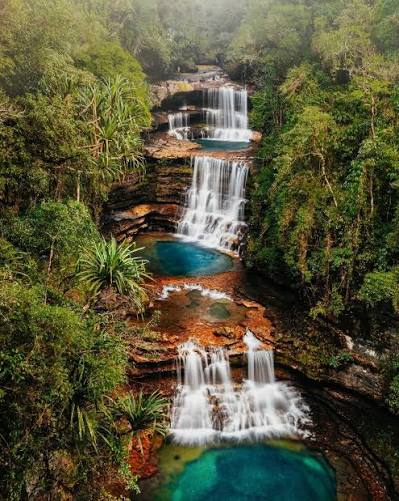
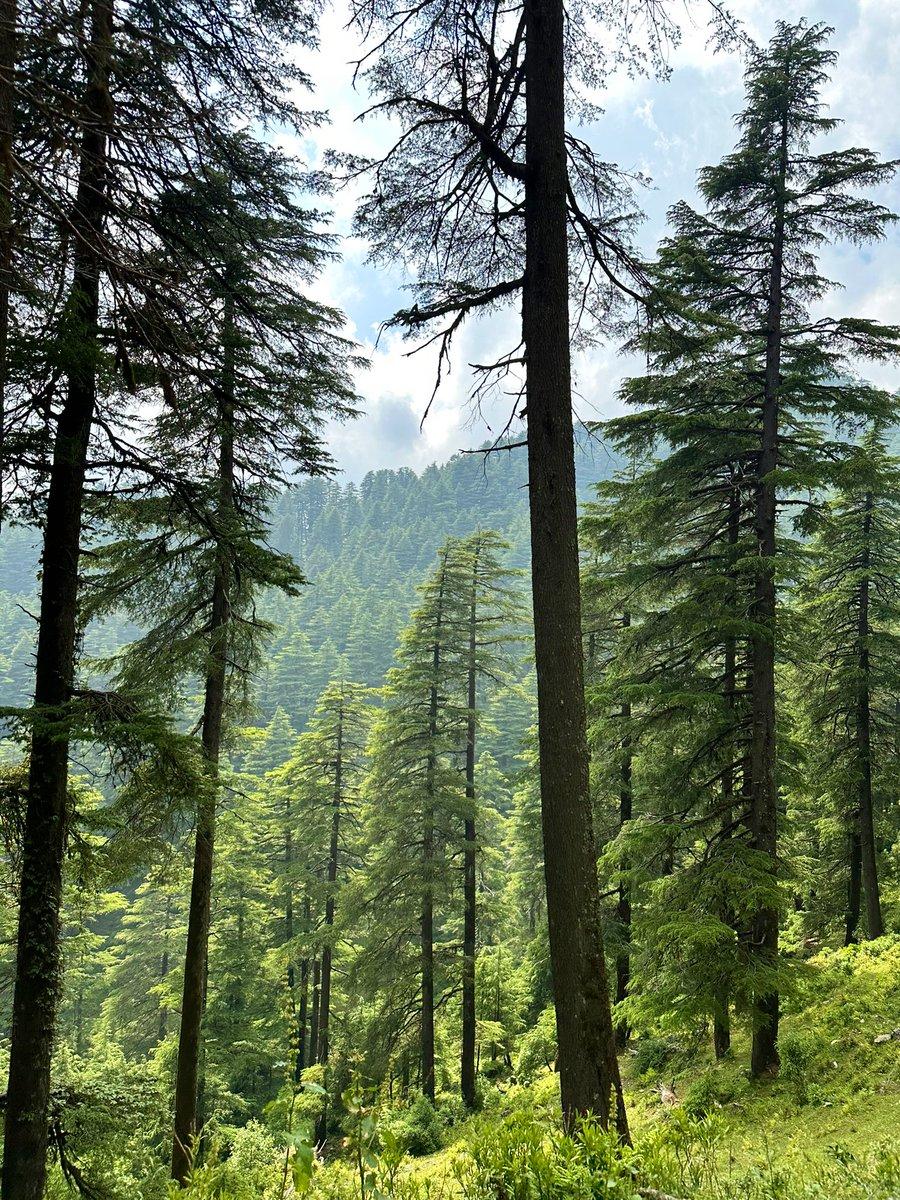
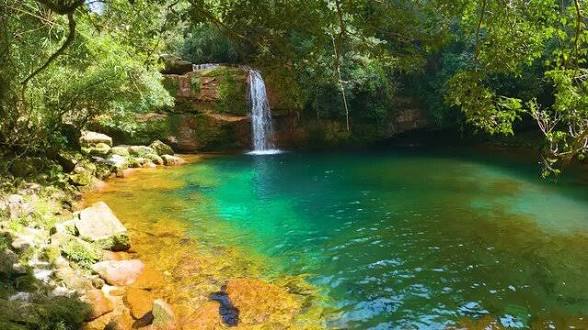
Meghalaya is one of the most distinctive states of Northeast India. The name Meghalaya is commonly translated as the “Abode of Clouds.” It is famous for its hills, forests, waterfalls, caves, living root bridges and extraordinary rainfall.
But Meghalaya is not simply a place where it rains all the time. Different parts of the state have different rainfall patterns, temperatures and landscapes. It is also home to the Khasi, Jaintia and Garo communities, each with its own food, clothing, festivals and cultural traditions. (meghalaya.gov.in)
1. Is Meghalaya a Separate State?
Yes. Meghalaya is a separate state of India, with Shillong as its capital.
It became an autonomous state in 1970 and a full-fledged state on 21 January 1972, after being separated from Assam. Today, the state has 11 districts according to the Meghalaya government portal. (meghalaya.gov.in)
Its total geographical area is approximately 22,429 square kilometres. (meghalaya.gov.in)
Meghalaya shares boundaries with Assam and Bangladesh.
2. How Many People Live in Meghalaya?
The official Meghalaya government portal lists the state’s population at around 29.7 lakh based on the 2011 Census. The 2011 Census literacy rate was 74.43%. (meghalaya.gov.in)
A large proportion of the population lives in rural areas. The major communities include:
- Khasi
- Jaintia
- Garo
- Other indigenous and local communities
Khasi, Pnar and Garo are important regional languages, while English is the official language. (meghalaya.gov.in)
3. Why Does Meghalaya Receive So Much Rain?
This is one of the most interesting things about Meghalaya.
The state is located in a hilly region where the Southwest Monsoon brings large amounts of moisture. When moist air encounters the Khasi Hills, it is forced upward. As the air rises, it cools and produces heavy rainfall.
This is one reason the southern Khasi Hills around Sohra (Cherrapunji) and Mawsynram receive extraordinary amounts of rain. Government sources describe the state as one of the world’s highest-rainfall regions. (meghalaya.gov.in)
The Meghalaya government’s older statistical description says that rainfall generally begins around May and continues through September, sometimes extending into October. (meghalaya.gov.in)
4. Does It Really Rain Continuously for an Entire Day?
People often hear stories that it can rain in Meghalaya for an entire day—or even for several days.
There is some truth behind this reputation, but it does not mean every part of Meghalaya receives continuous rain every day.
Rainfall can be extremely heavy in places such as Sohra and Mawsynram. At the same time, another part of the state may experience a different pattern.
So, Meghalaya should not be understood as a place where 24-hour rain occurs every single day. The intensity and duration change according to location, season and weather system.
5. How Much Rainfall Does Meghalaya Get?
The state’s average annual rainfall is extraordinarily high. A Meghalaya government profile gives an average annual rainfall of about 11,000 mm, although rainfall varies considerably between locations. (meghalaya.gov.in)
The southern Khasi Hills are particularly famous.
Historical government data cited rainfall in the approximate ranges of:
- Cherrapunji/Sohra: around 11,995–14,189 mm in the period discussed
- Mawsynram: around 10,689–13,802 mm
These figures vary by year, so they should not be treated as a fixed annual amount. (meghalaya.gov.in)
6. If There Is So Much Rain, Why Doesn’t Meghalaya Get a Huge Flood Everywhere?
This is a very good question.
Heavy rain does create risks of flash floods, waterlogging and landslides, but Meghalaya’s geography is different from a large flat river basin.
Much of the state consists of hills, plateaus, valleys and steep slopes. Water can therefore flow rapidly through streams, rivers and waterfalls instead of remaining across a huge flat area.
However, this does not mean Meghalaya is safe from floods.
For example, during the 2024 monsoon, the Meghalaya government reported excessive rainfall, landslides, flash floods, falling trees and infrastructure damage. From June 1 to July 3, 2024, cumulative rainfall was reported at 1,173.2 mm, 44% above normal for that period. (meghalaya.gov.in)
So the real situation is:
Heavy rain + mountains = strong runoff, landslides and flash-flood risk.
7. Does Meghalaya Get Storms and Strong Winds?
Yes.
Heavy rainfall does not protect Meghalaya from storms.
Thunderstorms, squally winds, hailstorms and cyclonic-storm-related weather can affect the state. In May 2024, Meghalaya’s disaster-management authority recorded incidents involving strong winds, cyclonic storms, hailstorms and heavy rainfall in several districts. (meghalaya.gov.in)
More recently, Meghalaya authorities have also reported incidents involving storms, hailstorms and lightning. (MegPlanning)
Therefore, the idea that “because Meghalaya receives so much rain, it does not get storms” would be incorrect.
8. Are Landslides a Problem?
Yes, especially during periods of intense monsoon rainfall.
Meghalaya’s combination of:
- steep hills,
- heavy rainfall,
- saturated soil,
- roads cut through mountains,
can increase landslide risk.
The state government has specifically reported monsoon-related landslides and road-connectivity problems. (meghalaya.gov.in)
This is one reason travellers need to check weather and road conditions before travelling during very heavy monsoon periods.
9. Is Meghalaya a Hilly Area?
Yes, very much so.
Meghalaya is primarily a land of hills and plateaus.
The state’s traditional geographical divisions are:
Khasi Hills
Located in central Meghalaya, including the Shillong and Sohra region.
Jaintia Hills
Located toward the eastern part of the state.
Garo Hills
Located mainly in western Meghalaya.
Government documents describe Meghalaya physiographically through these major hill regions. (meghalaya.gov.in)
This mountainous geography is responsible for many of the state’s waterfalls, caves, streams and spectacular viewpoints.
10. Why Is Meghalaya So Green?
The combination of rainfall, forests, streams, humidity and suitable temperatures creates excellent conditions for vegetation.
The state contains tropical, subtropical and higher-altitude vegetation. Agriculture and horticulture are also important parts of the local economy.
Meghalaya is known for products such as:
- turmeric
- pineapple
- oranges
- areca nut
- black pepper
- coffee
- tea
- various vegetables and fruits
The Meghalaya government notes significant agricultural and horticultural potential in the state. (meghalaya.gov.in)
11. What Food Is Famous in Meghalaya?
Meghalaya’s food is very different from the typical North Indian or South Indian food that many visitors know.
Rice is an important part of the local diet, and traditional cuisine uses vegetables, herbs, fermented ingredients and, in many communities, meat.
Some foods visitors may encounter include:
Jadoh
A traditional Khasi rice-and-meat preparation.
Dohneiiong
A Khasi preparation traditionally made with pork and black sesame.
Tungrymbai
A fermented soybean preparation.
Pukhlein
A popular traditional sweet/snack made from fermented rice. Meghalaya Tourism describes it as one of Shillong’s traditional desserts. (Meghalaya Tourism)
Pu Tharo
A local rice preparation traditionally baked in an earthen dish and commonly eaten with tea or chutneys. (Meghalaya Tourism)
Pu Doh
A preparation involving fermented soybeans and local herbs. (Meghalaya Tourism)
The food varies among Khasi, Jaintia and Garo communities, so there is no single dish that represents all of Meghalaya.
12. What Fruits and Local Produce Are Famous?
Meghalaya’s climate supports many fruits and plants.
Visitors can find products such as:
- pineapple
- mandarin oranges
- plums
- wild fruits
- turmeric
- bamboo-related products
- local vegetables
- spices
Meghalaya Tourism specifically highlights local fruits such as mandarins, pineapple, plum and Sohshang. (Meghalaya Tourism)
13. What Kind of Clothes Are Famous in Meghalaya?
Meghalaya has several distinct traditional clothing traditions because different communities have their own cultural identities.
Khasi Traditional Clothing
The Jainsem is one of the best-known traditional garments worn by Khasi women. Traditional ceremonial clothing can also include jewellery and head coverings. (Meghalaya Tourism)
Jaintia Clothing
Jaintia women have traditional garments including Yuslei and Thoh Khyrwang, with traditional jewellery used especially during festivals. (Meghalaya Tourism)
Garo Clothing
Garo women traditionally wear the Dakmanda, a handwoven wraparound garment. Garo textiles are known for colourful designs and traditional weaving techniques. (Meghalaya Tourism)
So Meghalaya does not have just one “Meghalaya dress.” There are different varieties connected with Khasi, Jaintia and Garo culture.
14. Is Traditional Handloom Still Important?
Yes.
Traditional weaving remains an important part of Meghalaya’s cultural identity.
The Garo community is known for handwoven Dakmanda, while Khasi communities are associated with traditional garments and Ryndia, an eri-silk textile. Jaintia communities also have traditional weaving practices. (Meghalaya Tourism)
Bamboo and cane crafts are also important because the local environment provides suitable natural materials.
15. How Is Education in Meghalaya?
Meghalaya has a formal school, college and higher-education system.
The state’s education history developed gradually, and Shillong became an important educational centre.
The Meghalaya government identifies institutions in Shillong and elsewhere including:
- North-Eastern Hill University
- IIM Shillong
- NIT Meghalaya
- NEIGRIHMS
- NIFT
- other colleges and professional institutions
The government also describes a community-oriented approach to elementary education, with school management involving local community representatives. (meghalaya.gov.in)
16. What Is Meghalaya’s Literacy Percentage?
According to the 2011 Census, Meghalaya’s overall literacy rate was 74.43%.
The government statistics give:
- Total: 74.43%
- Male: 75.95%
- Female: 72.89%
- Rural: 69.92%
- Urban: 90.79%
These are 2011 Census figures, so they should not be presented as the current 2026 literacy rate. (MegPlanning)
17. Why Do Tourists Visit Meghalaya?
Tourists do not visit Meghalaya only because of rain.
They come for a combination of:
- mountains
- waterfalls
- caves
- forests
- rivers
- living root bridges
- villages
- traditional culture
- food
- music and festivals
- trekking
- adventure activities
- peaceful landscapes
The state’s tourism resources include natural and cultural attractions spread across its hill regions. (MegPlanning)
18. How Many Tourists Visit Meghalaya?
Tourism has grown significantly.
According to Meghalaya’s 2025 Socio-Economic Review, approximately 14.23 lakh visitors came to Meghalaya during 2023–24. (MegPlanning)
For calendar year 2024, Meghalaya’s tourism statistics recorded approximately:
- 15,85,535 Indian tourists
- 23,075 foreign tourists
- 16,08,610 total tourists
So the state crossed 16 lakh total tourist visits in 2024. (Scribd)
These numbers are visitor visits, not necessarily 16 lakh different individual people, because tourism statistics can count visits/arrivals.
19. What Are Some Famous Places to Visit?
Some of the best-known attractions include:
Shillong
The capital city, surrounded by hills and known for its pleasant climate, lakes, parks and cultural life.
Sohra/Cherrapunji
Famous worldwide for extraordinary rainfall, waterfalls, caves and green landscapes.
Mawsynram
Another extremely high-rainfall location.
Living Root Bridges
These are remarkable structures created by guiding the roots of living trees over streams and pathways.
Dawki
Known for the Umngot River and the Bangladesh border region.
Nongriat
Known for its famous living root bridge and trekking route.
Garo Hills
Known for forests, wildlife and cultural experiences.
20. Does Meghalaya Have Cold Weather?
Yes.
Meghalaya does not remain cold throughout the year. It has different seasons.
The higher hill areas, especially around Shillong, can become quite cool during winter.
The lower areas can be warmer.
This means Meghalaya has a seasonal climate, rather than being permanently rainy and cold.
The state’s altitude varies considerably, and older government data describes temperatures ranging roughly from 2°C to 36°C depending on altitude and location. (meghalaya.gov.in)
21. Is Meghalaya a Place Where You Can Experience Different Weather in One Trip?
Yes.
A visitor can experience:
mist → sunshine → clouds → rain → cool weather
within a relatively short period, particularly in the hills.
This changing weather is one reason the landscape can look dramatically different from one hour to another.
However, visitors should not assume that every day will follow this exact pattern.
22. Why Is Meghalaya Called the “Abode of Clouds”?
The name itself is connected with the state’s cloudy and rainy landscape.
Meghalaya’s combination of:
high hills + moisture-filled monsoon winds + heavy rainfall + clouds + mist
creates the characteristic atmosphere for which the state is famous.
That is why photographs of Meghalaya often show mountains disappearing into clouds and mist.
23. Is Meghalaya Only About Nature?
No.
This is perhaps the most important point.
Meghalaya is also about people and culture.
The Khasi, Jaintia and Garo communities have their own:
- languages
- traditional clothing
- music
- dances
- festivals
- food
- crafts
- agricultural traditions
- community customs
For example, Wangala is an important Garo cultural festival, while Shad Suk Mynsiem is a major Khasi cultural celebration. (Meghalaya Tourism)
24. Why Is Meghalaya Different From Many Other Indian States?
Meghalaya has a combination that is unusual even within India:
very heavy monsoon rainfall + highland geography + tribal cultures + forests + caves + waterfalls + distinctive traditional clothing + unique cuisine.
The state therefore offers much more than a conventional hill-station experience.
25. Final Thought
Meghalaya can be understood as a place where rain has shaped geography, geography has shaped agriculture, and nature has influenced people’s culture and lifestyle.
The enormous rainfall around Sohra and Mawsynram is one of its most famous characteristics, but Meghalaya is not simply a “rainy state.” It is a mountainous region with forests, rivers, agriculture, communities, traditional handloom, distinctive food and a growing tourism economy.
At the same time, heavy rainfall brings real challenges. Landslides, flash floods, falling trees, road disruption and storms can occur during severe weather, so the beauty of Meghalaya also comes with the need for careful environmental and disaster management. (meghalaya.gov.in)
For someone visiting Meghalaya, the real experience is therefore not only “seeing the rain.” It is seeing how people, hills, forests, water, food, clothing and culture have developed together in one of India’s most distinctive landscapes.