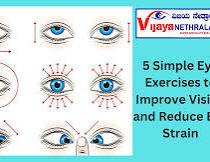
Good eye exercises include Palming, Blinking, Near & Far Focusing, and the 20-20-20 Rule, which help relax the eyes, improve focus, and reduce strain from screens, while exercises like the Figure Eight enhance eye muscle flexibility and coordination, improving overall visual comfort and function, though they don’t cure vision problems like myopia.
Relaxation & Strain Relief
- Palming: Rub your palms together to warm them, then cup them gently over closed eyes for a few minutes to relax eye muscles and reduce fatigue.
- Blinking: Blink frequently and fully to keep eyes moist, especially during screen time, preventing dryness and strain.
- 20-20-20 Rule: Every 20 minutes, look at something 20 feet away for 20 seconds to give your focusing muscles a break from near work.
Focus & Muscle Strength
- Near & Far Focus (Zooming): Hold your thumb close, focus, then shift focus to a distant object (like across the room), then back to your thumb, repeating to strengthen focusing muscles.
- Figure Eight: Slowly trace a large, imaginary figure-eight on the wall with your eyes (clockwise and then counter-clockwise) to improve eye movement flexibility.
- Eye Rolling: Roll your eyes in full circles (clockwise and counter-clockwise) to increase circulation and relax ocular muscles.
Coordination & Depth Perception
- Brock String: Uses a string with colored beads to train your eyes to work together and improve depth perception.
- Zig-Zag: Move your eyes in a zig-zag pattern across a point to improve agility and coordination.
Important Note: While these exercises relieve strain and improve comfort, they are not a substitute for professional medical treatment for underlying vision conditions like myopia (nearsightedness).
Relaxation & Moisture
- Palming: Rub hands warm, then cup over closed eyes for 1-2 mins to relax muscles and reduce strain.
- Blinking: Blink rapidly and consciously to keep eyes moist and reduce dryness from screens.
- 20-20-20 Rule: Every 20 mins, look at something 20 feet away for 20 seconds to relieve focusing fatigue.
Focus & Coordination
- Near & Far Focus (Zooming): Hold a pencil, focus on it, then shift focus to a distant object, then back to the pencil.
- Figure Eight: Trace a large figure-eight with your eyes to improve tracking and control.
- Pencil Push-Ups: Hold a pencil at arm’s length, focus on it, and slowly move it closer and farther to strengthen focus.
- Eye Rolling: Slowly roll eyes clockwise and counter-clockwise to stretch and relax muscles.
Tips for Screen Users
- Use the 20-20-20 rule regularly.
- Make a conscious effort to blink more often to prevent dryness.
These exercises help with visual comfort and muscle strength but don’t replace medical treatment for serious eye conditions, notes this article from Dr Agarwals Eye Hospital.
In this comprehensive guide, I share simple yet effective exercises to help reduce eye strain, improve focus, and strengthen your eye muscles. From the 20-20-20 rule to eye massages, these practices are perfect for anyone looking to keep their vision sharp and maintain optimal eye health, especially in the digital age.
The 20-20-20 Rule: A Simple Habit to Protect Your Eyes
Before we talk about specific exercises, let’s start with a simple rule that can help relieve eye strain. It’s called the 20-20-20 Rule, and it’s easy to remember. Every 20 minutes, look at something 20 feet away for at least 20 seconds. This rule is perfect for people like you and me who spend long hours in front of screens.
Why it works: When we focus on something up close for long periods, our eye muscles get tired. By looking at something farther away, you give your eye muscles a chance to relax and reduce the strain. It’s a great habit to get into, especially if you’re working, studying, or reading for extended periods.
Palming: Relaxing Your Eyes with Gentle Pressure
Palming is a wonderful exercise to relax your eyes. You can do this at any time of the day when your eyes start to feel tired or dry.
How to do it:
Sit comfortably and rub your hands together to generate heat.
Close your eyes and gently place the palms of your hands over them, without putting pressure on your eyelids.
Keep your palms relaxed, and breathe deeply for 30 seconds to a minute.
Why it works: The heat from your hands helps to relax the muscles around your eyes. Palming also blocks out light and helps your eyes rest. It’s like giving your eyes a mini vacation!
Eye Rolling: Improve Flexibility and Circulation
Eye rolling is a simple exercise that can improve the flexibility of your eye muscles and stimulate better blood circulation. This can reduce eye strain and prevent discomfort.
How to do it:
Sit in a relaxed position with your back straight and shoulders down.
Slowly roll your eyes in a circular motion. Start by looking up, then move your eyes in a clockwise direction, making a full circle.
Do this for 10 seconds, then switch and roll your eyes counterclockwise for another 10 seconds.
Repeat 5 times.
Why it works: Eye rolling helps improve the flexibility of the eye muscles and enhances circulation, which keeps your eyes fresh. It can be especially helpful after long periods of reading or staring at a screen.
Blink Breaks: Moisturize Your Eyes
You probably don’t realize it, but when we look at screens or concentrate hard, we tend to blink less. This can cause our eyes to dry out and become irritated. Blinking is a simple but powerful exercise that can help keep your eyes moist and prevent dryness.
How to do it:
Take a short break from what you’re doing and close your eyes.
Blink rapidly for about 10 seconds.
Then, close your eyes gently and rest them for 20 seconds.
Repeat 5-10 times throughout the day.
Why it works: Blinking spreads the tear film across your eyes, moisturizing them and preventing dryness. It’s a simple and effective way to keep your eyes comfortable throughout the day, especially if you work on a computer for long hours.
Focus Shifting: Strengthening Your Eye Muscles
Focus shifting is an excellent exercise to help your eyes switch focus between near and far objects. This exercise helps to strengthen the muscles responsible for focusing, improving your ability to focus clearly at different distances.
How to do it:
Hold your finger or a pen about 6 inches from your eyes and focus on it.
Slowly move your finger or pen to about 10 feet away from your eyes, while keeping your focus on it.
Slowly move your finger or pen to about 10 feet away from your eyes, while keeping your focus on it.
Then, slowly bring your finger or pen back to the starting position, focusing as you go.
Repeat this process 10-15 times.
Why it works: This exercise strengthens the ciliary muscles that help focus the lens of the eye. Regularly shifting focus between near and far objects can help improve your eye’s flexibility and ability to focus at different distances.
The Pencil Push-Up: Improve Focus and Strength
Another great exercise to improve your ability to focus is the Pencil Push-Up. This is a fantastic exercise for people who experience difficulty focusing on objects up close or far away.
How to do it:
Hold a pencil (or any small object) at arm’s length, at eye level.
Focus on the writing or detail on the pencil.
Slowly bring the pencil toward the bridge of your nose while keeping your focus on it.
Stop when you feel your eyes start to strain, and then slowly move the pencil back to the starting position.
Repeat this exercise 10-15 times.
Why it works: This exercise helps to improve the flexibility and strength of your eye muscles, especially the muscles involved in focusing. Regular practice can improve your ability to focus at different distances and reduce eye strain.
Near and Far Focusing: Train Your Eyes to Adapt
This exercise is simple but effective in training your eyes to focus on objects at different distances. It’s great for people who want to keep their vision sharp and responsive.
How to do it:
Find a near object (such as a book or a small picture) and a far object (like a tree or a building).
Focus on the near object for 10-15 seconds.
Then, quickly switch your focus to the far object and focus on it for 10-15 seconds.
Repeat this exercise 5-10 times.
Why it works: This exercise strengthens the eye muscles that help you focus at varying distances. It helps improve the flexibility of the eye muscles, which is important for maintaining good vision.

The Figure Eight: Enhance Eye Movement and Coordination
The Figure Eight exercise is a fantastic way to improve your eye coordination and range of motion. It’s simple but very effective for keeping your eyes agile and flexible.
How to do it:
Sit comfortably and keep your head still.
Imagine a large figure eight in front of you, about 10 feet away.
Slowly trace the figure eight with your eyes, moving in a fluid motion.
Do this for about 30 seconds in one direction, then switch and trace it in the opposite direction for another 30 seconds.
Repeat this exercise 3 times.
Why it works: This exercise improves the flexibility and coordination of your eye muscles, which is important for tasks like reading, driving, and other daily activities. It’s a great way to keep your eyes agile and sharp.
Eye Massage: Relieve Tension and Boost Circulation
An eye massage can do wonders for relieving tension and improving blood circulation around your eyes. It’s an excellent way to relax after a long day or a stressful task.
How to do it:
Use your ring finger to gently massage around your eyes.
Start from the inner corner of your eyebrows and move along your eyebrows to the outer corner.
Then, gently massage the area under your eyes, moving from the inner corner to the outer corner.
Finish by massaging the temples.
Perform this for 2-3 minutes.
Why it works: This massage helps to relieve tension in the muscles around your eyes and boosts blood circulation, which can help reduce the risk of eye strain and discomfort.
Good Sleep and Hydration: Don’t Forget the Basics!
Lastly, no eye exercise routine is complete without taking care of your overall health. Good sleep and hydration are essential for healthy eyes. When you’re well-rested and hydrated, your eyes function better and are less prone to strain and dryness.
Why it works: Sleep allows your eyes to recover and refresh, while staying hydrated ensures that your eyes stay lubricated and healthy.
Q&A Section:
Q1: How often should I do these eye exercises?
Ans) You should aim to do these exercises every day, especially if you spend a lot of time looking at screens or reading. For most exercises, you can start with 5-10 minutes a day and gradually increase the duration as your eyes get used to the routine.
Q2: Can eye exercises cure poor vision or myopia (nearsightedness)?
Ans) Eye exercises can help reduce eye strain, improve focus, and keep your eye muscles healthy, but they won’t cure refractive errors like nearsightedness or farsightedness. If you have issues with your vision, it’s important to see an optometrist for the right treatment or prescription glasses.
Q3: Are there any other lifestyle changes that can help improve
Eye Rolling: Improve Flexibility and Circulation
Eye rolling is a simple exercise that can improve the flexibility of your eye muscles and stimulate better blood circulation. This can reduce eye strain and prevent discomfort.
How to do it:
Sit in a relaxed position with your back straight and shoulders down.
Slowly roll your eyes in a circular motion. Start by looking up, then move your eyes in a clockwise direction, making a full circle.
Do this for 10 seconds, then switch and roll your eyes counterclockwise for another 10 seconds.
Repeat 5 times.
Why it works: Eye rolling helps improve the flexibility of the eye muscles and enhances circulation, which keeps your eyes fresh. It can be especially helpful after long periods of reading or staring at a screen.
Blink Breaks: Moisturize Your Eyes
You probably don’t realize it, but when we look at screens or concentrate hard, we tend to blink less. This can cause our eyes to dry out and become irritated. Blinking is a simple but powerful exercise that can help keep your eyes moist and prevent dryness.
How to do it:
Take a short break from what you’re doing and close your eyes.
Blink rapidly for about 10 seconds.
Then, close your eyes gently and rest them for 20 seconds.
Repeat 5-10 times throughout the day.
Why it works: Blinking spreads the tear film across your eyes, moisturizing them and preventing dryness. It’s a simple and effective way to keep your eyes comfortable throughout the day, especially if you work on a computer for long hours.
Focus Shifting: Strengthening Your Eye Muscles
Focus shifting is an excellent exercise to help your eyes switch focus between near and far objects. This exercise helps to strengthen the muscles responsible for focusing, improving your ability to focus clearly at different distances.
How to do it:
Hold your finger or a pen about 6 inches from your eyes and focus on it.
Slowly move your finger or pen to about 10 feet away from your eyes, while keeping your focus on it.
Then, slowly bring your finger or pen back to the starting position, focusing as you go.
Repeat this process 10-15 times.
Why it works: This exercise strengthens the ciliary muscles that help focus the lens of the eye. Regularly shifting focus between near and far objects can help improve your eye’s flexibility and ability to focus at different distances.
The Pencil Push-Up: Improve Focus and Strength
Another great exercise to improve your ability to focus is the Pencil Push-Up. This is a fantastic exercise for people who experience difficulty focusing on objects up close or far away.
How to do it:
Hold a pencil (or any small object) at arm’s length, at eye level.
Focus on the writing or detail on the pencil.
Slowly bring the pencil toward the bridge of your nose while keeping your focus on it.
Stop when you feel your eyes start to strain, and then slowly move the pencil back to the starting position.
Repeat this exercise 10-15 times.
Why it works: This exercise helps to improve the flexibility and strength of your eye muscles, especially the muscles involved in focusing. Regular practice can improve your ability to focus at different distances and reduce eye strain
Q&A Section:
Q1: How often should I do these eye exercises?
Ans) You should aim to do these exercises every day, especially if you spend a lot of time looking at screens or reading. For most exercises, you can start with 5-10 minutes a day and gradually increase the duration as your eyes get used to the routine.
Q2: Can eye exercises cure poor vision or myopia (nearsightedness)?
Ans) Eye exercises can help reduce eye strain, improve focus, and keep your eye muscles healthy, but they won’t cure refractive errors like nearsightedness or farsightedness. If you have issues with your vision, it’s important to see an optometrist for the right treatment or prescription glasses.
Q3: Are there any other lifestyle changes that can help improve eye health?
Ans) Absolutely! Along with exercises, eating a balanced diet rich in vitamins A, C, and E, omega-3 fatty acids, and antioxidants can help protect your eyes. Make sure to wear sunglasses to protect your eyes from harmful UV rays, and practice good posture to avoid additional strain on your eyes.
Q4: Can I do these exercises while wearing glasses or contact lenses?
Ans) Yes, you can still do these exercises while wearing glasses or contact lenses. The exercises are meant to strengthen your eye muscles, regardless of whether you need corrective lenses. Just make sure your prescription is up to date to avoid any discomfort during the exercises.
Q5: Will these exercises help prevent age-related vision problems?
Ans) While these exercises can help keep your eyes healthy and reduce strain, they can’t fully prevent age-related vision changes like presbyopia (difficulty focusing on close objects). Regular eye check-ups are essential as you age to catch any vision issues early.