

When the Mind Changes: Spiritual Growth, Samskaras, Desired
Introduction
Human life is a journey of constant change. No person remains the same throughout life. Our thoughts, emotions, desires, relationships, ambitions, and even our understanding of God evolve as we grow older. Sometimes we are deeply devoted to prayer and worship, while at other times we suddenly lose interest in rituals. We may wonder whether this change is a sign of spiritual progress, a test from God, or simply a natural stage of life.
Many people experience a period when they no longer feel excited about daily worship, temple visits, or religious rituals. Instead, they begin asking deeper questions about life, the soul, karma, suffering, and God. Is this wrong? Or does it indicate that spirituality is moving from external practices to inner understanding?
The great Hindu scriptures—including the Bhagavad Gita, the Upanishads, the Ramayana, the Mahabharata, the Garuda Purana, and many other sacred texts—suggest that spiritual life is not limited to rituals alone. They describe a gradual journey in which the human mind matures, desires change, attachments weaken, and wisdom slowly develops.
This article explores how samskaras, desires, family, education, relationships, aging, and spiritual realization are all connected in the evolution of human life.
What Are Samskaras?
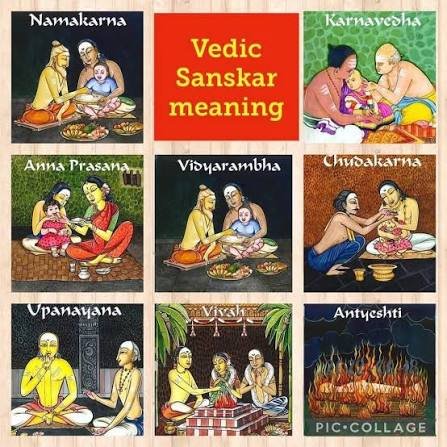
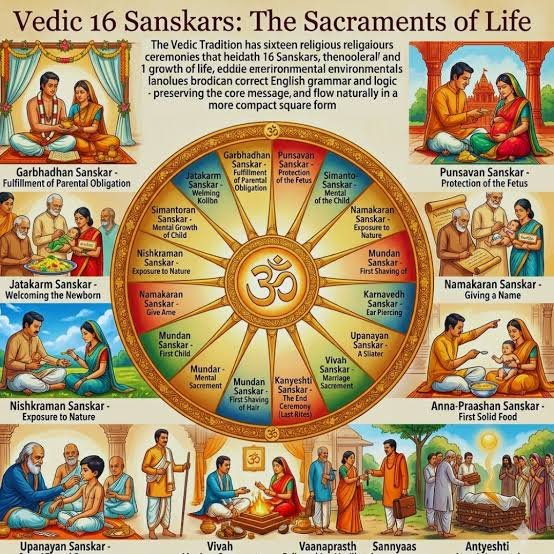
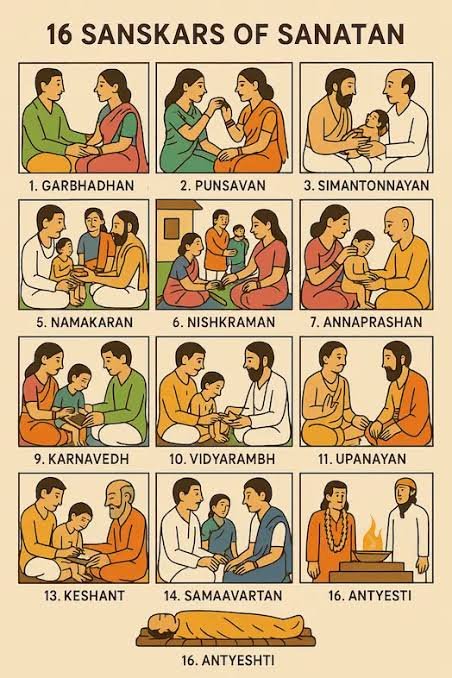
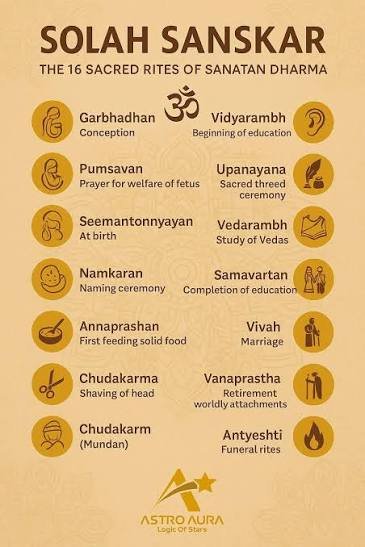
The Sanskrit word Samskara refers to the deep impressions left upon the mind by experiences, thoughts, habits, education, family values, and previous actions. Every experience creates a subtle mark in the mind.
A child learns language, behavior, honesty, kindness, discipline, and faith from parents, grandparents, teachers, and society. These become the child’s samskaras.
Good samskaras encourage compassion, honesty, patience, humility, and devotion.
Negative samskaras encourage greed, anger, jealousy, addiction, violence, and selfishness.
Every decision we make strengthens one type of samskara while weakening another.
The Birth of Desire
Every desire begins with a samskara.
Suppose a young man meets a girl whom he admires. At first there is only curiosity. Slowly admiration becomes affection. Affection becomes emotional attachment. Eventually he wishes to marry her.
Once marriage takes place and they spend years together, the excitement naturally changes. Love may remain, but the intensity of longing usually decreases because the original desire has been fulfilled.
This does not necessarily mean love has disappeared.
Rather, one stage of desire has completed its purpose.
The mind always seeks what it does not yet possess.
When something becomes part of everyday life, the craving often reduces naturally.
This is not failure.
It is simply the nature of the human mind.
The Same Principle Applies to Education
Imagine someone dreams of earning an MBA from a prestigious college.
For years the student studies tirelessly.
The dream becomes the strongest desire in life.
After graduation, however, the same person rarely wishes to repeat the entire degree simply for emotional satisfaction.
The desire has completed its journey.
The samskara connected with that ambition gradually becomes peaceful.
This illustrates an important truth.
Every desire has a beginning, a peak, and an end.
Can Samskaras End?
Yes.
Every samskara continues only as long as it receives attention, emotion, and repetition.
Once knowledge develops, many unnecessary desires disappear automatically.
For example, a child may be curious about stealing something.
If parents patiently explain why stealing causes suffering, guilt, and social harm, that negative samskara may disappear before it becomes a habit.
Knowledge destroys ignorance.
Wisdom weakens unhealthy desires.
Does Spiritual Growth Reduce Interest in Ritual Worship?
This is one of the deepest questions in spiritual life.
Sometimes a person who once performed daily worship suddenly loses interest.
Many become frightened and think they are moving away from God.
However, Hindu philosophy offers another possibility.
External worship and internal realization are different stages of the same journey.
In the beginning, rituals discipline the mind.
Later, meditation deepens awareness.
Eventually, some people begin seeking God through silence, self-inquiry, compassion, and wisdom rather than through external ceremonies alone.
This does not mean rituals are useless.
Rather, the relationship with God becomes more inward than outward.
However, losing interest because of laziness, ego, or distraction is different from moving toward genuine spiritual understanding. Therefore, honest self-examination is important.
What Do the Upanishads Teach?
The Upanishads repeatedly teach that the highest truth is found within.
They encourage seekers to ask:
“Who am I?”
“What is the soul?”
“What remains after every desire disappears?”
Instead of merely performing rituals, they encourage realization through knowledge.
According to the Upanishads, true wisdom arises when the mind becomes peaceful enough to recognize the eternal Self.
What Does the Bhagavad Gita Say?
The Bhagavad Gita explains that desire is natural.
But attachment to desire creates suffering.
It teaches that human beings should perform their duties sincerely while gradually reducing selfish attachment to the results.
This is known as Karma Yoga.
The Gita also explains that knowledge slowly burns away ignorance, just as fire burns dry wood.
As wisdom increases, many unnecessary desires naturally fade.
Family and the Formation of Character
Human beings are not born with complete understanding.
Parents shape the earliest samskaras.
Grandparents contribute experience.
Teachers provide knowledge.
Society teaches responsibility.
Friends influence personality.
Joint families often pass traditions from one generation to another.
Children learn simple lessons:
Do not lie.
Respect elders.
Help others.
Avoid dangerous places.
Stay away from harmful people.
Study sincerely.
Pray with gratitude.
These repeated teachings gradually become lifelong samskaras.
Society and Experience
As children become adults, education, friendships, work, success, failure, disappointment, and responsibility reshape their minds.
Life itself becomes the greatest teacher.
Every challenge leaves an impression.
Every victory creates confidence.
Every mistake offers wisdom.
Slowly, a person’s understanding becomes deeper than book knowledge.
Marriage, Parenthood, and New Samskaras
After education comes employment.
After employment often comes marriage.
Then children are born.
Now the parents begin creating samskaras in another generation.
The cycle continues.
The values they received from their own parents become the values they pass to their children.
Thus, civilization survives through the continuous transmission of good samskaras.
Why Human Thinking Changes with Age
Youth is naturally filled with ambition.
Middle age emphasizes responsibility.
Old age often encourages reflection.
This is neither weakness nor failure.
It is the natural rhythm of life.
Hormonal changes, physical energy, health, experience, and maturity all influence the human mind.
The interests of a twenty-year-old are rarely identical to those of a sixty-year-old.
This change is natural.
What Happens After Fifty?
According to the traditional Hindu understanding of the four stages of life, the years after fifty gradually become a period of detachment from excessive worldly ambition.
Many people notice:
• less interest in competition
• reduced attraction toward material success
• greater appreciation for peace
• deeper concern for health
• increased spiritual curiosity
• desire to guide younger generations
• acceptance of life’s temporary nature
This change should not be feared.
It is a sign of psychological and spiritual maturity.
Does God Reduce Our Attachments?
Many spiritual teachers believe that sometimes God gently reduces unnecessary attachments so that the soul can move toward greater wisdom.
This does not happen through force.
Instead, life experiences slowly reveal the temporary nature of worldly pleasures.
The same person who once chased status may later value peace.
The one who sought wealth may later seek contentment.
The one who loved argument may later prefer silence.
Whether we describe this as God’s grace, spiritual maturity, or the natural evolution of consciousness, the result is often the same—a calmer mind.
Is Old Age Meant to Be Lived with Dignity?
Absolutely.
Growing older should never become a source of shame.
Every stage of life has its own beauty.
Youth brings energy.
Middle age brings responsibility.
Old age brings wisdom.
There is no need to imitate youth forever.
Living according to one’s age with confidence, humility, and self-respect reflects maturity.
The elderly possess something the young cannot easily obtain—experience.
The Journey from Desire to Wisdom
Human life often follows a repeating pattern.
First comes curiosity.
Then desire.
Then effort.
Then achievement.
Then satisfaction.
Then detachment.
Finally comes understanding.
This cycle repeats throughout life—in relationships, education, career, wealth, and even spiritual practice.
Recognizing this cycle helps reduce unnecessary suffering.
Conclusion
Human life is woven from samskaras, desires, relationships, duties, experiences, and spiritual growth. Every stage has a purpose. Childhood builds character, youth pursues dreams, adulthood fulfills responsibilities, and later life invites reflection and inner peace. It is natural for some desires to fade after they are fulfilled, just as it is natural for new questions about life and God to arise with age.
Hindu philosophy does not teach that spiritual growth means abandoning the world or rejecting worship. Rather, it teaches that the mind gradually matures. Rituals, knowledge, devotion, selfless action, and meditation are different paths that can support this journey. The Bhagavad Gita emphasizes performing one’s duties without excessive attachment, while the Upanishads encourage the search for the eternal Self. Together, these teachings suggest that wisdom grows as attachment becomes lighter and understanding becomes deeper.
If a person finds that external worship has become less compelling but their desire to understand truth has become stronger, it may simply reflect a new stage in spiritual development. The important question is not how many rituals are performed, but whether the heart is becoming more compassionate, peaceful, truthful, and aware.
In the end, every samskara, every desire, every success, every relationship, and every challenge becomes part of the soul’s education. The purpose of life is not merely to collect experiences but to grow through them. As desires settle and wisdom expands, a person begins to recognize that lasting peace does not come from possessing more—it comes from understanding oneself, living with integrity, and moving closer to the Divine with humility and awareness.