



Arandi Plant: A Common Rainy-Season Plant with Benefits,
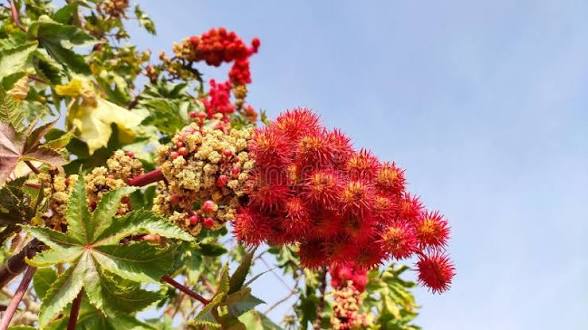
The Arandi plant, commonly known as the castor plant, is often seen growing naturally in empty plots, roadsides, fields, gardens, and other places during the rainy season. Its scientific name is Ricinus communis.
When the soil contains enough moisture and the weather is warm, this plant can grow quickly. During the monsoon, its seeds may also spread through natural processes, allowing new plants to appear in different places.
However, a plant growing naturally in many places does not necessarily mean that it has no value. When cultivated, harvested, and processed properly, Arandi can become an important agricultural and commercial crop.
What Is Arandi Oil Called?
The oil extracted from Arandi seeds is known as Castor Oil.
Castor oil has been used in different industries for many years. It is valued because of its special chemical properties and its ability to be processed for different purposes.
Common Uses of Castor Oil
Castor oil may be used in:
Skin-care and cosmetic products
Hair-care products
Soap and personal-care products
Some pharmaceutical formulations
Industrial lubricants
Paints, coatings, and chemical products
Certain manufacturing processes
One important point should always be remembered: raw castor seeds and properly processed castor oil are not the same thing. Processing and purification are extremely important.
What Are the Possible Benefits of the Arandi Plant?
The Arandi plant has value in agriculture, industry, and commercial production. Its biggest importance comes mainly from its seeds and the oil obtained from them.
- A Valuable Source of Castor Oil
The seeds of the plant contain oil that can be extracted through proper industrial methods.
This oil has applications in several sectors. Because of this, Arandi cultivation can become a source of income for farmers in suitable climatic conditions.
- Use in Cosmetic and Personal-Care Products
Castor oil is commonly used as an ingredient in different cosmetic and personal-care products.
It may be found in products such as:
Hair oils
Creams
Soaps
Lip products
Skin-care formulations
The exact benefit depends on the formulation and the way the product is prepared.
- Importance in Hair-Care Products
Many people use castor-oil-based products for hair care. It is often used as a conditioning oil because of its thick texture.
However, it is important to understand that different people may have different skin and scalp reactions. A product that suits one person may not necessarily suit another.
- Use in the Pharmaceutical Industry
Properly processed castor oil has also been used in pharmaceutical preparations.
Historically, castor oil has been used as a laxative, which means it can help stimulate bowel movement in certain situations.
However, it should not be consumed casually or repeatedly without proper medical guidance.
Excessive use can cause problems such as:
Stomach discomfort
Diarrhea
Dehydration
Electrolyte imbalance
Therefore, medicinal use should always be approached carefully.
Can Medicine Be Made from Arandi?
Yes, properly processed castor oil has pharmaceutical applications.
Castor oil has been included in some medicinal formulations and has traditionally been used for constipation because it can stimulate the intestines.
But this does not mean that every Arandi product can be eaten or used as medicine.
Raw seeds should never be treated as a home remedy.
The plant and its seeds contain toxic substances. Proper processing, purification, dosage, and medical supervision are important.
The Biggest Danger: Arandi Seeds Can Be Toxic
This is one of the most important things people should know about the Arandi plant.
Raw castor seeds contain a highly toxic substance known as ricin. Because of this, the seeds should not be eaten or experimented with.
Children and animals should also be kept away from raw seeds.
The fact that the plant grows naturally does not mean that every part of it is safe for direct use.
Nature provides many useful plants, but correct knowledge is necessary before using them.
Can People Grow Arandi as a Commercial Crop?
Yes. Arandi can be cultivated commercially in suitable regions.
Farmers grow castor primarily for its seeds, which are used for oil extraction and other industrial purposes.
Commercial cultivation requires attention to:
Climate and temperature
Soil conditions
Suitable seed varieties
Irrigation requirements
Pest and disease management
Harvesting methods
Market prices
A farmer should not begin large-scale cultivation simply because the plant is growing naturally nearby. Commercial farming requires planning and knowledge about the local market.
Arandi Farming Can Become a Business Opportunity
Arandi has value beyond simply selling raw seeds.
There can be opportunities in different stages of the supply chain.
- Seed Production and Sale
Farmers may grow the crop and sell harvested seeds to traders or processing units.
The income depends on:
Production quality
Market demand
Seed yield
Transportation costs
Local and international prices
2. Oil Extraction Business
Castor oil can be extracted from seeds through suitable processing systems.
However, this type of business requires proper machinery, safety procedures, quality control, and knowledge of regulations.
The leftover material from oil extraction must also be handled carefully because it may contain harmful components.
- Cosmetic Product Manufacturing
Businesses can develop properly formulated products using processed castor oil, such as:
Hair-care products
Skin-care products
Soaps
Cosmetic formulations
But commercial products should follow safety standards, labeling rules, and quality regulations.
- Industrial Supply Business
Castor-derived products are used in different industries. A business may participate by supplying:
Raw castor seeds
Processed oil
Industrial-grade materials
Ingredients for manufacturing companies
This creates opportunities not only for farmers but also for processors, traders, transporters, and manufacturers.
Why Should We Not Simply Use Wild Arandi Plants as Medicine?
A plant growing beside a road, field, or empty land may look natural and harmless, but it can be contaminated by:
Dust
Pollution
Chemicals
Pesticides
Heavy metals from contaminated soil
In addition, identifying the correct plant and using the correct part in the correct way is important.
Therefore, people should avoid preparing medicine from wild plants without proper scientific and medical knowledge.
Environmental Importance of the Arandi Plant
Plants such as Arandi also play a role in natural vegetation.
They can grow in disturbed or unused land and contribute to plant cover. However, their growth should also be managed properly in agricultural areas.
A plant that grows quickly may sometimes compete with other crops or occupy land where farmers want to grow useful agricultural produce.
Therefore, whether the plant is considered useful or unwanted depends partly on where and how it is growing.
Can Arandi Become a Good Source of Income?
Yes, but success depends on planning.
Simply planting Arandi does not guarantee profit. Farmers and entrepreneurs should first understand:
Who will buy the seeds?
What is the local market price?
Is there a processing unit nearby?
What will be the transportation cost?
Which variety is suitable for the region?
What are the expected production costs?
A better approach is to study the market before starting cultivation on a large scale.
The Difference Between a Wild Plant and a Commercial Crop
This is an important point.
A wild Arandi plant may grow naturally without anyone caring for it. But commercial Arandi farming is different.
Commercial production requires:
Good seeds + suitable land + proper farming methods + safe harvesting + market access + correct processing.
The same plant that appears to be an ordinary wild plant can become part of an agricultural and industrial value chain when managed correctly.
Final Thoughts
The Arandi plant is commonly seen during the rainy season because warm weather and sufficient moisture help it grow quickly. Many people may consider it an ordinary wild plant, but it has significant commercial value because of the oil obtained from its seeds.
Properly processed castor oil has uses in cosmetics, personal care, pharmaceutical preparations, and several industrial products. Arandi can also be cultivated as a commercial crop and may create business opportunities in farming, seed supply, oil processing, and product manufacturing.
At the same time, caution is extremely important. Raw castor seeds can contain dangerous toxic substances and should never be eaten or used casually as medicine.
The real lesson is simple: a plant growing naturally around us may have great value, but knowledge, safe processing, and responsible use are necessary to turn that value into a real benefit.
Arandi is not just a plant that suddenly appears during the rainy season. With proper cultivation, processing, safety, and market planning, it can become an important agricultural resource and a possible source of business and employment.