


From Barefoot Living to Modern Life Nature, Spirituality


Human life has changed enormously. Today we have shoes, cars, smartphones, machines, hospitals, modern houses and countless technologies. If we go back many centuries, the lifestyle of ordinary people, kings, saints and spiritual seekers was very different.
From Barefoot Living to Modern Life: What Ancient Human Beings Can Teach Us About Nature, Spirituality and Humanity
There was a time when modern footwear manufacturing did not exist. People often walked barefoot or used simple forms of footwear made from naturally available materials. Clothing was also produced from materials such as cotton, wool, leather and plant fibres, depending on the region and period.
But ancient life was not only about the absence of machines. It was also about a different relationship with nature, family, society, spirituality and daily discipline.
This raises an important question:
Have modern human beings gained comfort but lost some of the connection with nature and inner life that earlier generations had?
Let us explore this question step by step.
1. How Did People Live Before Modern Machines?
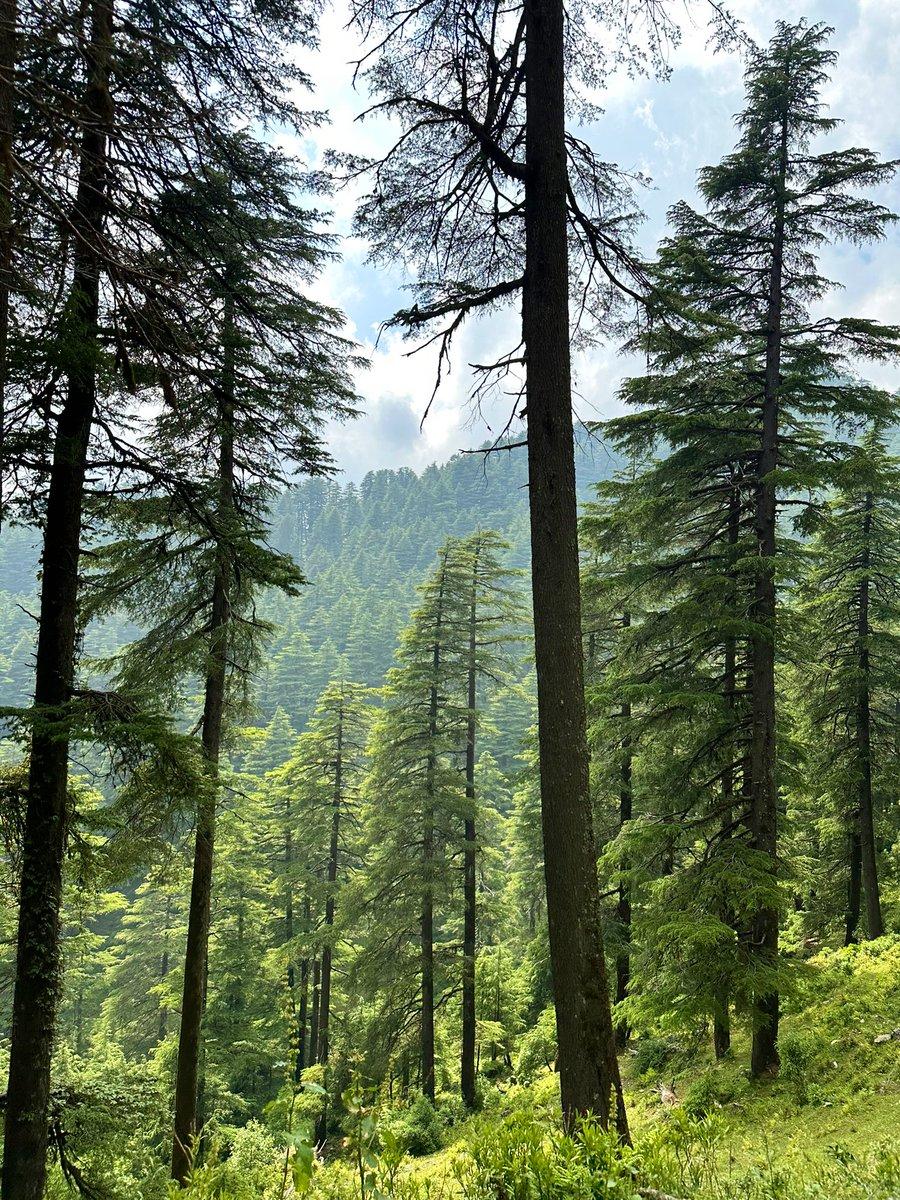
Before industrialization, people depended heavily on their surroundings.
They obtained food from farming, forests, animals, rivers and local markets. Clothing was produced through traditional skills. Houses were constructed with locally available materials.
There were no modern factories producing millions of pairs of shoes and clothes.
People therefore had to live according to what their environment could provide.
This does not mean that ancient people always lived peacefully or that every ancient practice was perfect. History also contains poverty, wars, inequality and social conflicts.
Still, their daily life was generally much more connected with the natural environment than modern urban life.
2. Why Did Barefoot Walking Have Importance?


Walking barefoot was common in many societies because footwear was not as easily available as it is today.
In some Indian spiritual traditions, barefoot living also became associated with simplicity, humility, pilgrimage and religious practice.
A person walking barefoot on soil, grass or a natural path could experience the ground directly.
Today, however, footwear has an important practical purpose. It protects the feet from:
- Sharp objects
- Hot surfaces
- Cold
- Dirt
- Injuries
- Infections
So barefoot walking should not automatically be considered better for everyone. The lesson we can take from older lifestyles is perhaps simplicity and awareness of our surroundings, rather than abandoning useful modern protection.
3. The Relationship Between Hindu Thought and Nature


Hindu traditions contain many ideas in which nature is treated with reverence.
The Earth is often addressed as Prithvi Mata, or Mother Earth. The Sun is worshipped as Surya, and fire has an important place in rituals such as havan and yajna.
Water, air, trees, rivers and mountains also have important places in Indian religious and cultural traditions.
It is important to understand the deeper idea behind this.
The Earth provides the ground on which human beings live.
The Sun provides light and energy.
Water supports life.
Air is necessary for breathing.
Fire provides heat and has been central to human civilization.
Whether a person understands these things religiously, scientifically or philosophically, one fact remains:
Human life cannot exist without nature.
4. Why Is the Sun Called Father in Some Traditions?
The Sun has been important to human civilization since ancient times.
Without sunlight, Earth’s natural systems would be radically different. Plants depend on sunlight for photosynthesis, and sunlight is fundamental to the Earth’s climate and energy systems.
In Indian traditions, Surya is not merely viewed as a physical object in the sky. Surya worship can also represent gratitude for light, energy and life.
Calling the Sun a father or divine force is therefore part of a spiritual way of understanding humanity’s relationship with the natural world.
5. Fire, Air, Water and Earth Are Common to Everyone
Here is something worth thinking about.
The Earth does not change its basic nature according to national borders.
The Sun rises and sets for people across countries.
Air is needed by human beings everywhere.
Water is essential in every society.
Fire has played a fundamental role in human civilization across the world.
A person may belong to India, America, Africa, Europe or another part of the world, but the basic requirements of human life remain remarkably similar.
This common dependence on nature gives us a powerful lesson:
Nature connects humanity before religion, caste and nationality divide people.
6. Hinduism and the Idea of Ancient Spiritual Knowledge
Hinduism is widely regarded by scholars as one of the world’s oldest continuously practiced religious traditions.
Many Hindus regard Sanatana Dharma as timeless and deeply connected with eternal principles.
However, calling one religion the “only true religion” is a matter of faith and belief rather than something that can be established as an objective historical fact.
What can be studied historically is the enormous body of Indian religious and philosophical literature, including the Vedas, Upanishads, Bhagavad Gita, Puranas and many other traditions.
These texts and traditions discuss subjects such as:
- Dharma
- Karma
- Self-discipline
- Knowledge
- Meditation
- Duty
- Nature
- Spiritual development
- The relationship between individual life and the larger universe
7. Ancient Education Was Not Only About Earning Money
Education in traditional Indian thought was often connected with more than employment.
Knowledge could involve:
Character + discipline + responsibility + spiritual understanding + practical skills.
The guru-shishya tradition is one example of an educational relationship in which learning was connected with discipline and personal development.
Modern education has expanded enormously and provides access to science, technology, medicine, engineering, economics and many other fields.
The challenge today is not choosing between ancient and modern education.
Perhaps the better goal is to combine:
Modern knowledge with wisdom, ethics and responsibility.
8. Khadi and Cotton Have a Long History


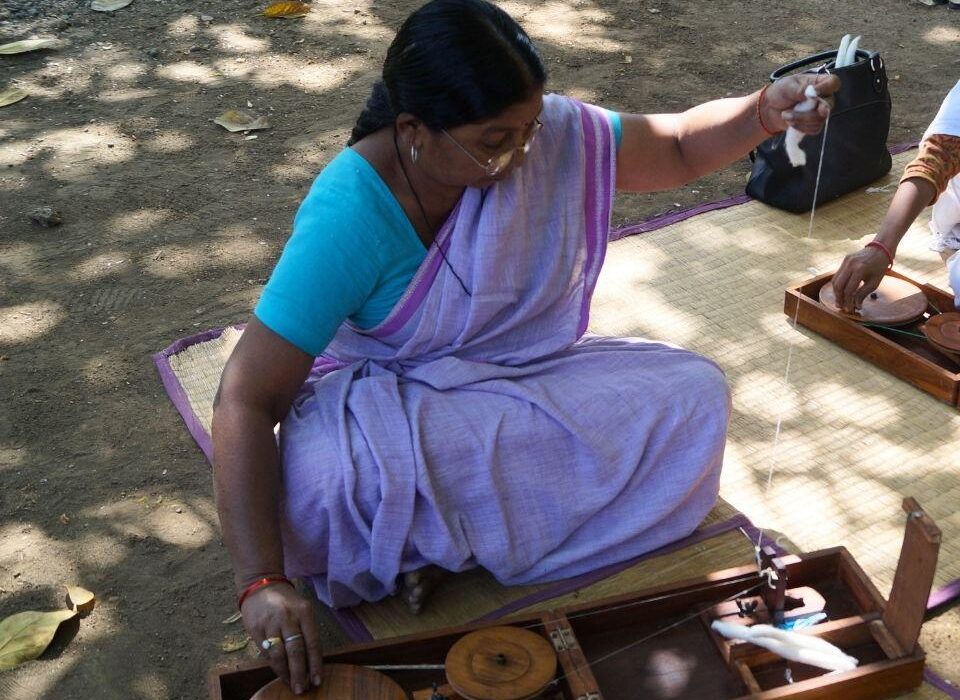
Cotton has a very long history in the Indian subcontinent, while hand-spun and handwoven textiles developed through generations of craftsmanship.
Khadi became especially significant in India’s freedom movement and was strongly associated with Mahatma Gandhi’s emphasis on self-reliance and village industries.
Traditional textiles remind us that clothing was once closely connected to local agriculture, craftsmanship and community employment.
Today, modern textile factories can produce clothing at enormous scale. Yet traditional handloom and handmade clothing still carry cultural and economic value.
9. Nature Has Given Humans Many Things for Free
Think about everyday life.
We do not manufacture the Sun.
We do not manufacture the Earth’s basic atmosphere.
We do not create rainfall by ourselves in the natural sense.
We did not design the existence of soil, oceans, forests and ecosystems.
Human beings can use technology to modify their surroundings, but we remain dependent on natural systems.
This is why environmental protection is not merely a modern fashion.
It is connected to the basic question of human survival.
10. The Earth Is Beautiful Because of Its Diversity


The natural world is beautiful because it contains enormous diversity.
There are:
- Mountains
- Oceans
- Deserts
- Forests
- Rivers
- Grasslands
- Snow-covered regions
- Tropical regions
- Different climates
- Millions of species
Humans are only one part of this larger system.
Animals are also different from one another. Plants have their own forms and characteristics. Even within the human species, people differ in appearance, language, culture, abilities and personalities.
Diversity itself is not a problem.
The problem begins when humans turn differences into reasons for hatred.
11. If Humans Are So Similar, Why Do They Fight?
This is perhaps one of the biggest questions.
People from different countries may speak different languages and follow different religions. But their basic human needs are similar.
Everyone needs food.
Everyone needs water.
Everyone needs shelter.
Everyone experiences happiness and sadness.
Everyone is born, grows older and eventually dies.
Parents care for children. People seek security and dignity. Human beings want respect and a meaningful life.
Yet people sometimes fight over religion, caste, political power, money, land and identity.
Why?
Because human beings do not only live according to biological needs. They also create social identities.
12. Religion Can Become a Source of Division When Used Politically
Religion can provide people with spirituality, morality, community and a sense of meaning.
But religion can also become a political identity.
When political competition turns religious or caste identity into a weapon, ordinary people can become divided.
The important question should be:
Does our identity help us become better human beings, or does it make us hate another human being?
A person’s religion should ideally encourage values such as compassion, honesty, self-control and responsibility.
13. What Is Caste?
Caste is a complex historical and social system in South Asia, and it cannot be reduced to one simple definition.
In everyday conversation, the word “caste” can refer to inherited social communities or jati. Classical discussions of varna are related but are not identical to the enormous variety of jatis that developed historically.
Over centuries, social status, occupation, family background and community identity became connected in complicated ways.
Today, caste can influence social life, marriage, politics and access to opportunities.
But an important distinction should be made:
A person’s inherited social identity should not determine their human worth.
14. Can Caste Be a Personal Identity Without Becoming a Weapon?
A person may identify with a family, community, region or cultural tradition.
Identity itself is not necessarily harmful.
The problem begins when identity becomes a reason to declare another person inferior.
There is a difference between saying:
“This is my community and my cultural background.”
and saying:
“My community makes me more valuable than you.”
The first is identity.
The second becomes discrimination.
15. Human Beings Are Different—and Also Similar
Men and women are different in many biological respects, and individual personalities vary greatly.
But all humans belong to the same species, Homo sapiens.
People have different appearances, heights, voices, talents and personalities.
These differences are real.
But difference does not automatically mean superiority or inferiority.
A society becomes healthier when it allows people to develop their abilities rather than judging their worth solely by birth.
16. Animals Are Another Form of Nature’s Diversity
Humans are not the only living beings on Earth.
Animals have developed extraordinarily different bodies and abilities.
Birds fly.
Fish live in water.
Some animals survive in deserts.
Others survive in freezing environments.
Plants have also adapted to different climates and ecosystems.
This diversity shows us that nature does not follow a single design for life.
It creates many forms, each suited to particular conditions.
17. The Human Body Also Has Limits
Modern human beings sometimes imagine that technology can solve everything.
Technology has given us extraordinary abilities, but the human body still has limits.
We need sleep.
We need food.
We need water.
We need oxygen.
We become tired.
We age.
We become ill.
Eventually, every human life ends.
This is why ancient spiritual traditions often emphasized humility.
Human beings may possess great abilities, but ability is not the same as unlimited power.
18. Imagination Is Powerful, but Reality Has Limits
Human imagination is extraordinary.
We can imagine flying machines, cities on other planets, artificial intelligence, new medicines and completely different societies.
Some ideas that once seemed impossible have become reality.
But imagination alone does not change physical reality.
Nature imposes boundaries.
Science and engineering succeed partly because they understand those boundaries rather than simply ignoring them.
This is an important lesson for modern life:
Dream boldly, but understand reality.
19. Spiritual Growth and Physical Health Should Go Together


A meaningful life does not need to be based only on material achievement.
Money, technology and physical comfort are useful, but people also need:
- Mental peace
- Healthy relationships
- Physical health
- Knowledge
- Emotional balance
- Purpose
- Self-discipline
Yoga, meditation, prayer and other spiritual practices can be meaningful to people in different ways.
At the same time, spirituality should not become an excuse to ignore medical care, nutrition or evidence-based health practices.
A balanced life can respect both spiritual wisdom and modern healthcare.
20. Even Good Things Can Become Harmful in Excess
There is a simple principle found in many areas of life:
Too much of something can become harmful.
Food is necessary, but overeating can harm health.
Work is necessary, but excessive work can create exhaustion.
Money is useful, but obsession with money can damage relationships.
Technology is useful, but excessive screen use can interfere with sleep and everyday life.
Even religious practice can become unhealthy if it turns into hatred, fear or blind hostility toward others.
Balance is one of the most valuable principles of life.
21. What Does “Living According to Nature” Mean?
Living according to nature does not mean rejecting modern civilization.
It can mean understanding our dependence on natural systems.
For example:
- Eat a balanced diet.
- Respect sleep.
- Spend some time outdoors.
- Protect water.
- Avoid unnecessary waste.
- Plant and protect trees where appropriate.
- Respect animals.
- Keep surroundings clean.
- Adapt sensibly to weather.
- Avoid consuming more than necessary.
The objective is not to return completely to ancient life.
The objective is to learn from the past without abandoning the useful achievements of the present.
22. What Can Modern Society Learn From Ancient Simplicity?
Ancient people did not have everything we have today.
Modern medicine has saved countless lives.
Modern sanitation has transformed public health.
Modern transportation connects distant places.
Modern communication allows information to travel around the world within seconds.
We should not romanticize the past as though everything was perfect.
But ancient lifestyles can still teach us something about:
Simplicity, restraint, gratitude, community, discipline and respect for nature.
These values remain relevant even in a technologically advanced society.
23. Politics Should Not Consume Human Life
Politics is necessary in a democratic society because governments make decisions that affect everyone.
But political identity should not become the entire identity of a human being.
A person is more than:
- Their political party
- Their caste
- Their religion
- Their profession
- Their social status
A human being also has relationships, dreams, responsibilities, emotions and personal values.
Political disagreement is normal.
Hatred between ordinary people does not have to be.
24. The Deeper Lesson of Nature
When we look carefully at nature, we see two things at the same time:
Unity and diversity.
The same basic natural laws operate across the planet.
Yet nature creates extraordinary diversity.
This can become a powerful metaphor for human society.
We do not have to be identical to live together.
People can have different religions, languages, traditions and cultures while still recognizing their shared humanity.
25. What Does Spiritual Progress Really Mean?
Spiritual progress should not be measured only by the number of rituals a person performs.
For many people, spirituality is also about becoming:
- More truthful
- More compassionate
- More disciplined
- Less selfish
- More responsible
- More peaceful
- More respectful toward others
- More conscious of nature
A person may perform many rituals but still behave badly toward other human beings.
Conversely, someone may live a simple life while demonstrating kindness, honesty and responsibility.
The deeper question is:
What kind of person are we becoming?
26. A Step-by-Step Way to Live a More Balanced Life
Here is a practical approach inspired by both traditional wisdom and modern understanding.
Step 1: Respect Nature
Remember that your life depends on air, water, soil, sunlight and ecosystems.
Step 2: Take Care of Your Body
Eat sensibly, sleep adequately and remain physically active.
Step 3: Develop Your Mind
Read, learn, question and continue improving your knowledge.
Step 4: Control Excess
Avoid unnecessary consumption and unhealthy habits.
Step 5: Respect Family and Community
Relationships provide emotional and social support.
Step 6: Keep Your Spiritual Side Alive
Prayer, meditation, reflection or quiet time can help some people develop inner peace.
Step 7: Do Not Hate Over Identity
Religion, caste, nationality and political beliefs should not become excuses for hatred.
Step 8: Accept Human Differences
People will never be completely identical—and that is part of human society.
Step 9: Use Modern Technology Wisely
Take advantage of modern tools without allowing them to control every part of your life.
Step 10: Search for Meaning
A successful life is not measured only by wealth. Knowledge, health, relationships, service and inner peace also matter.
Conclusion: Ancient Wisdom and Modern Life Can Coexist
Human civilization has travelled a very long distance—from barefoot walking and handmade clothing to smartphones, modern medicine, artificial intelligence and advanced machines.
We should not blindly reject modern progress, and we should not blindly idealize the ancient past.
Instead, we can take the best lessons from both.
From modern civilization, we can take science, medicine, education, technology and greater opportunities.
From ancient traditions, we can continue exploring self-discipline, spiritual reflection, respect for nature, simplicity, responsibility and the idea that human life has a deeper purpose.
The Earth does not ask a person which political party they support before providing sunlight. Air does not ask about caste before entering the lungs. Water does not ask about religion before sustaining life.
That does not mean all human differences are meaningless. Culture and identity can be valuable. But perhaps the deeper lesson is that identity should help us understand ourselves, not become a reason to hate someone else.
The real progress of humanity may not be only about building faster machines or richer cities.
It may also be about learning how to live with nature, knowledge, spirituality, health and one another in a more balanced way.
Technology can increase our power.
Knowledge can increase our understanding.
But wisdom teaches us how to use both.